
If you live in Southern California, there’s a good chance you’ve already lost power to a Public Safety Power Shutoff, or watched a Red Flag Warning alert arrive and wondered whether tonight was the night. A PSPS isn’t an equipment failure or a grid overload, it’s a deliberate decision by your utility to cut power before high winds turn a downed line into a wildfire. That makes it different from most outages in one important way: it’s often predictable, and that means it’s also genuinely preparable for.
This guide covers what actually triggers a shutoff, how much real advance notice SCE and SDG&E give, and how to keep your home running when the grid goes dark on purpose. It also connects to our earthquake and outage preparedness series, since the backup power question is the same whether the grid goes down from wildfire risk or seismic damage: see How to Prepare Your Home for a Major California Earthquake, What Happens if the Power Goes Out After an Earthquake?, Can Solar Panels Still Work After an Earthquake?, and How Long Can a Home Battery Power Your House?
What Triggers a Public Safety Power Shutoff?
According to SCE’s own PSPS FAQ, a shutoff is considered during dangerous fire weather when strong winds, dry vegetation, and low humidity are forecast together, conditions under which a fire could spread rapidly if utility equipment ignited one. Both SCE and SDG&E weigh a similar set of factors:
- A Red Flag Warning issued by the National Weather Service
- Sustained high winds or forecast wind gusts, monitored through pole-top weather stations on or near the circuit
- Low humidity levels
- Dry vegetation that could serve as fuel near power lines
- On-the-ground observations from field personnel stationed in high fire-risk areas
- Input from local fire agencies and awareness of any active evacuation orders
No single factor triggers a shutoff on its own, it’s the combination that matters, which is why two windy days can produce very different outcomes depending on humidity and vegetation conditions.
How Much Advance Notice Do SCE and SDG&E Give Before a PSPS?
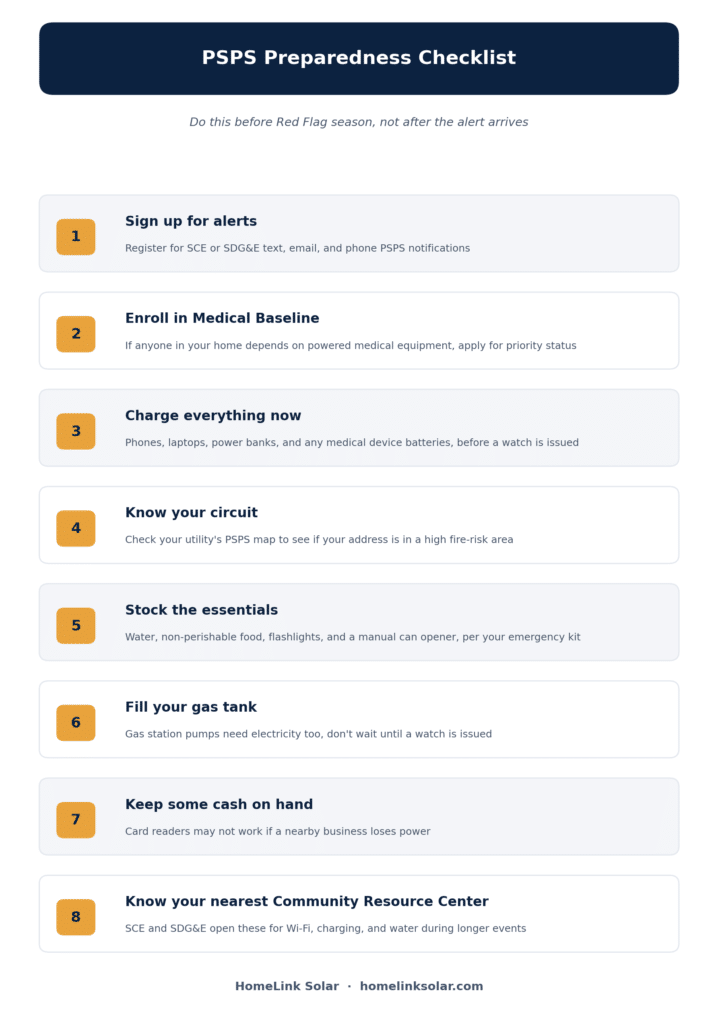
SCE generally aims to notify affected customers approximately 48 hours before a potential shutoff, with a follow-up update roughly 24 hours out, sent by email, text, or phone call. SDG&E follows a similar staged approach, notifying customers, critical facilities, and Medical Baseline program participants as weather forecasts firm up, then confirming again once power is actually shut off. Both utilities are direct about a real limitation: forecasts can shift quickly, and in fast-moving weather events there may be little to no advance notice at all. Don’t treat the 48-hour window as a guarantee, treat it as the best case.
Do PSPS Shutoffs Happen Year-Round or Only in Wildfire Season?
Later into the year than most people expect. Traditional wildfire season concerns summer and early fall, but Southern California’s PSPS risk is driven heavily by Santa Ana wind events, which peak in the fall and can continue into January. SDG&E specifically references preparing customers “in advance of peak Santa Ana wind season,” a window that runs later than the summer fire season most homeowners picture. Practically, that means PSPS risk in SCE and SDG&E territory should be treated as a fall-through-winter concern, not something that ends when summer does.
How Can I Keep My Home Powered During a PSPS Event?
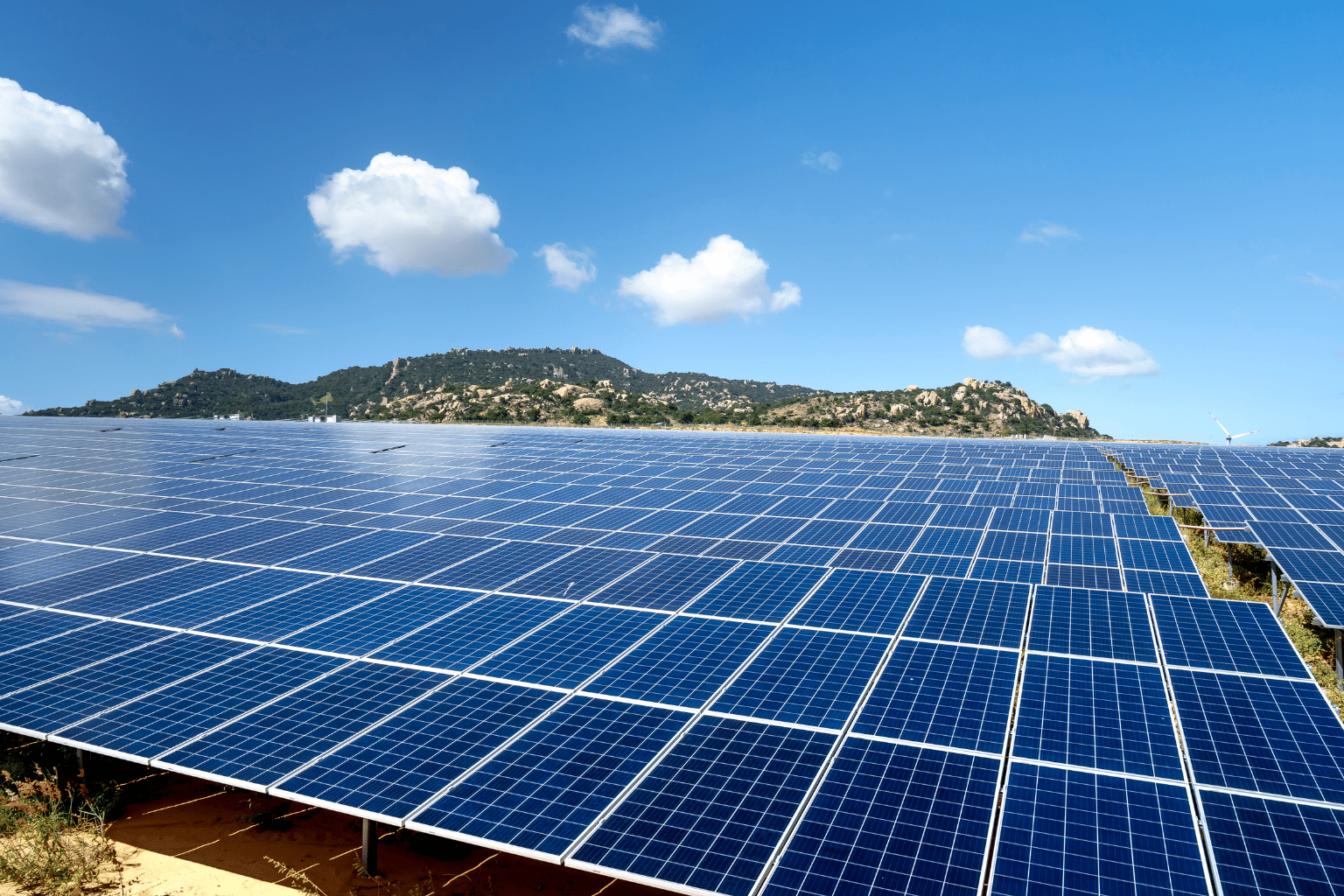
The same way you’d keep it powered through any grid outage: with a battery, not with solar panels alone. Standard grid-tied solar systems are required to shut down automatically the moment the grid loses power, a federal safety rule called anti-islanding protection, built into UL 1741 and IEEE 1547 standards, that protects utility crews from a home system backfeeding power into a line they believe is de-energized. We cover exactly why this catches people off guard in Can Solar Panels Still Work After an Earthquake?, and the mechanism is identical whether the outage is PSPS-driven or earthquake-driven.
A battery, or solar paired with a battery, is what actually keeps your home running. According to the California Public Utilities Commission, a single home battery typically powers priority circuits for 24 to 48 hours, and if solar is recharging it during daylight hours, that runtime extends for as long as the outage lasts. Since PSPS events specifically come with real advance warning, unlike most other outage causes, they’re also the outage type where a fully charged battery going into the event matters most; there’s genuinely no excuse for a dead battery when you had two days of notice. For the full math on runtime by load and battery sizing, see How Long Can a Home Battery Power Your House?
PSPS vs. Earthquake Outages: Same Prep, Different Trigger
It’s worth being direct about this: a PSPS and an earthquake-caused outage have almost nothing in common as events, one is a deliberate, forecast-driven utility decision, the other is sudden, physical grid damage, but they demand the same response from a homeowner. Both mean the grid goes down with your solar panels automatically disconnecting per the anti-islanding rule described above. Both mean your actual protection is a correctly sized battery, not the size of your solar array. And both mean the difference between a minor inconvenience and a genuinely difficult few days comes down to preparation you did beforehand, not decisions you make once the power is already out. If you’ve read our earthquake outage guide, the backup power section there applies here almost word for word.
Medical Baseline and Vulnerable Customers
If anyone in your household depends on powered medical equipment, refrigerated medication, or similar needs, both SCE and SDG&E offer a Medical Baseline program that provides priority notification ahead of a PSPS and, in some cases, additional support. Enrollment happens before an event, not during one, so this belongs on the “do it now” list rather than the “figure it out later” list.
Where to Get Real-Time PSPS Updates
Check your utility’s own outage map directly rather than relying on secondhand reports: SCE’s Outage Center and PSPS Weather Dashboard, or SDG&E’s sdge.com/ready page, both show near-real-time circuit status. PrepareForPowerDown.com, a joint consumer preparedness site funded through the California Public Utilities Commission and operated by PG&E, SDG&E, and SCE together, is also a solid neutral resource for general PSPS prep guidance beyond what any single utility publishes.
Does HomeLink Solar’s Battery Backup Switch On Automatically During a PSPS?
Yes, for systems designed with battery backup and a transfer switch or gateway, the switch to stored battery power happens automatically the moment the grid goes down, whether that’s a PSPS or any other outage cause, typically within milliseconds. HomeLink Solar (CSLB License #1117534) designs every battery system around your household’s actual priority circuits rather than a generic package, and owner Mandy oversees every install personally, with no subcontractors. If you’re in a high fire-risk area and want to know exactly how your home would perform through a multi-day PSPS event before the next Red Flag Warning arrives, our team can walk through sizing options built for your specific home. You can also see real completed installs on our our installs page, browse general solar and battery education on our learning hub, or get a free personalized quote.
FAQs
What Triggers a Public Safety Power Shutoff?
A combination of factors assessed together: a National Weather Service Red Flag Warning, high winds, low humidity, dry vegetation near power lines, and on-the-ground observations from utility field personnel. No single factor triggers a shutoff alone.
How Much Advance Notice Do SCE and SDG&E Give Before a PSPS?
SCE generally aims for about 48 hours notice with a follow-up update around 24 hours out. SDG&E follows a similar staged notification process. Both utilities are clear that fast-moving weather can mean little to no advance notice in some cases.
How Can I Keep My Home Powered During a PSPS Event?
With a battery, or solar paired with a battery. Standard grid-tied solar shuts off automatically during any grid outage under federal anti-islanding rules, so only a battery system designed to disconnect from the grid and power your home independently keeps things running.
Do PSPS Shutoffs Happen Year-Round or Only in Wildfire Season?
Mostly fall through winter in Southern California, driven by Santa Ana wind season, which extends later into the year than traditional summer wildfire season. PSPS risk shouldn’t be treated as something that ends when summer does.
Does HomeLink Solar’s Battery Backup Switch On Automatically During a PSPS?
Yes, for systems designed with battery backup and a transfer switch, the switchover to stored battery power happens automatically within milliseconds of the grid going down, regardless of whether the cause is a PSPS or another type of outage.
Related Reading
This piece connects to our earthquake and outage preparedness series. See How to Prepare Your Home for a Major California Earthquake, What Happens if the Power Goes Out After an Earthquake?, Can Solar Panels Still Work After an Earthquake?, and How Long Can a Home Battery Power Your House? Also see our Power Choice Program for solar and battery options with no large upfront cost, and HomeLink vs. Sunrun if you’re comparing providers.
Sources
- SCE — Public Safety Power Shutoff FAQs
- SDG&E — PSPS More Info
- California Public Utilities Commission — Public Safety Power Shutoff FAQs
- PrepareForPowerDown.com — PSPS: What You Can Do to Prepare (joint PG&E / SDG&E / SCE consumer resource)