California has more than a 99 percent chance of a magnitude 6.7 or larger earthquake sometime in the next 30 years, according to the U.S. Geological Survey’s Uniform California Earthquake Rupture Forecast. If you have solar, or you’re considering it, that statistic raises two very different questions people tend to blend into one: will the panels survive the shaking, and will they keep your home powered afterward? The answers aren’t the same, and understanding both is the actual point of this guide.
Two Different Questions, Not One
“Do solar panels work after an earthquake” usually means one of two things. The first is structural: did the shaking damage the equipment? The second is functional: does the system still deliver power to your home once the ground stops moving, especially if the grid goes down? A panel can survive a quake completely intact and still go dark the moment your utility loses power, for reasons that have nothing to do with earthquake damage. Both questions deserve real answers.
Are Solar Panels Damaged by Earthquake Shaking?
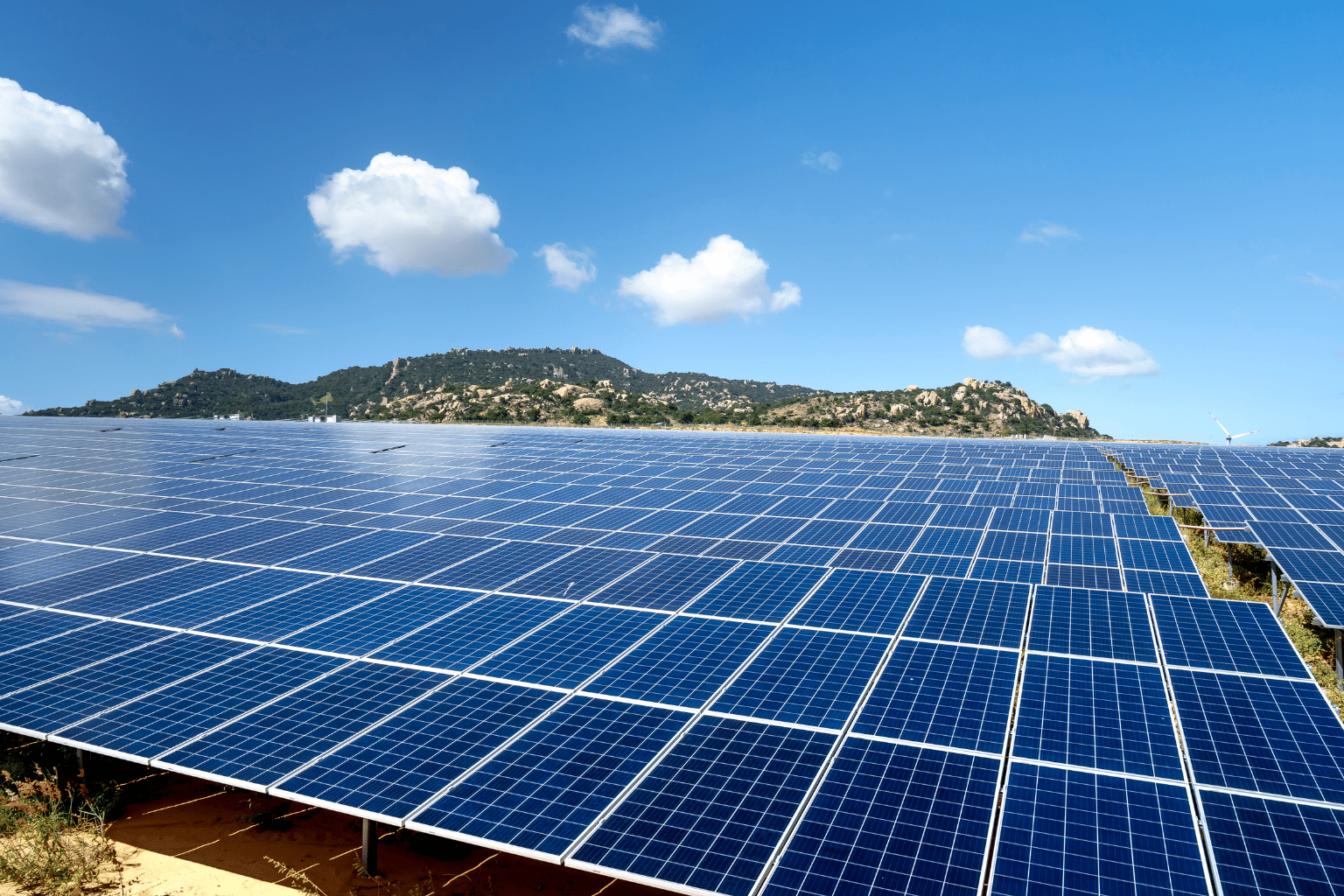
Generally, no, not in a properly engineered installation, and there’s a straightforward structural reason why. Solar racking in the United States is engineered to the same lateral force standards used for wind loads, and in California, to additional seismic provisions shaped by the Structural Engineers Association of California (SEAOC) and the International Building Code. Aluminum, the metal used in nearly all residential racking, bends under stress rather than snapping. When Solar Power World interviewed installers and engineers across the industry, every company they spoke with said they hadn’t witnessed any damage to solar projects from earthquakes. As one Alaska-based solar contractor put it, “solar racking and panels have strength through flexibility.”
That doesn’t mean every installation is risk-free. A few factors change the picture:
- Roof-mounted vs. ground-mounted. Roof systems depend on the structural integrity of the roof itself, an older home with an already-stressed roof is a different starting point than new construction.
- Ballast weight in high-seismic zones. Ballasted (non-penetrating) systems add weight to a roof that may already be near its rated load limit, this matters more in regions with frequent seismic activity.
- Panel glass. Tempered glass can crack under extreme deflection, but direct panel breakage from seismic loading is rare when the racking and mounting were engineered correctly in the first place.
- Building amplification. The shaking a roof-mounted array actually feels can be measurably stronger than the shaking at ground level, since buildings amplify ground motion as it travels upward.
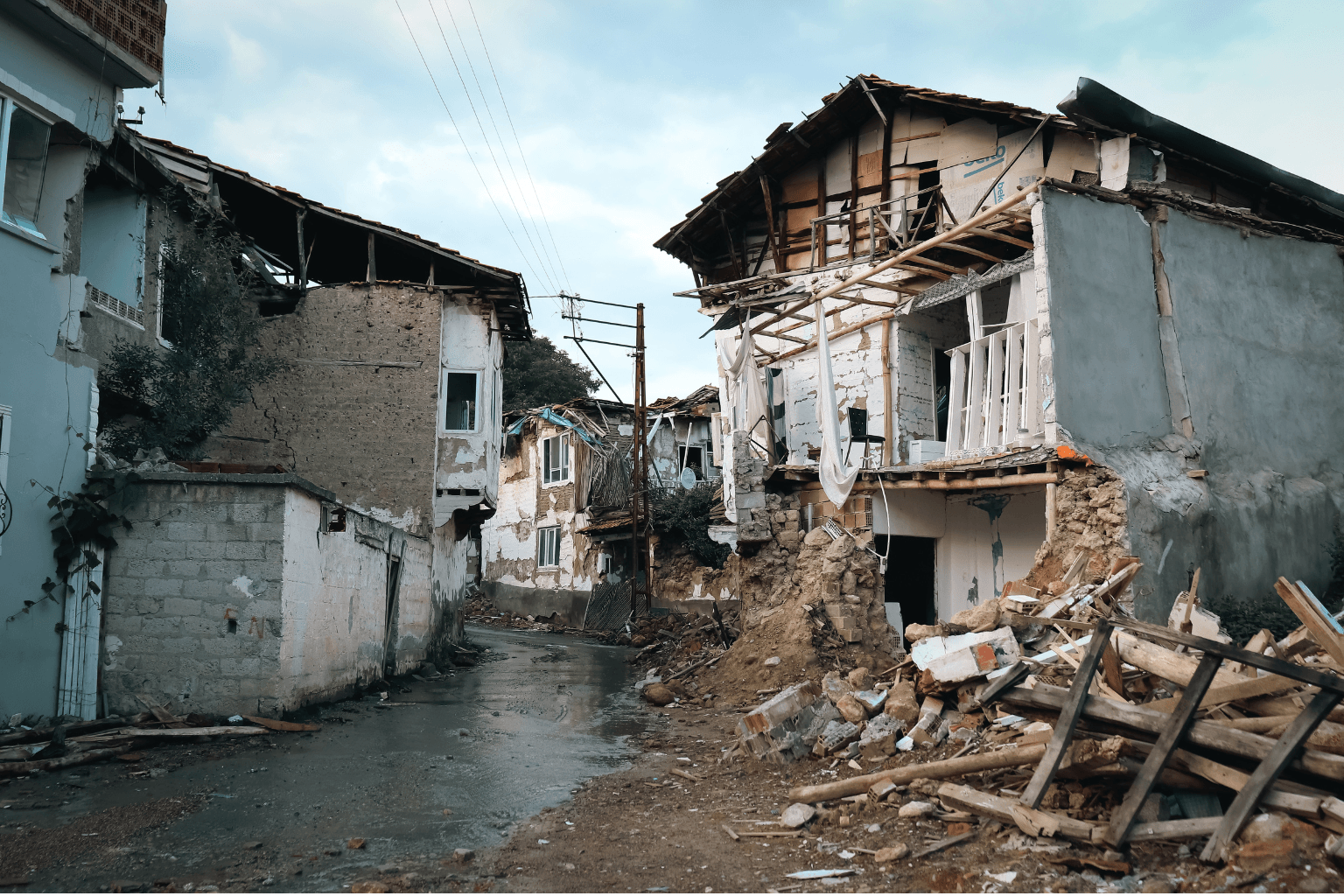
Real-world California earthquakes back this up. The 2019 Ridgecrest sequence, a magnitude 6.4 foreshock followed by a magnitude 7.1 mainshock, caused widespread but localized damage, with about 6,900 Southern California Edison customers losing power after the first quake, restored by the next morning. Neither the 2014 South Napa earthquake nor the 1994 Northridge earthquake, the two most damaging recent California quakes, produced widely reported solar equipment failures. The lesson isn’t that damage is impossible, it’s that a correctly engineered system is built to flex with the same forces it’s already designed to survive from wind.
Why Don’t Solar Panels Alone Provide Power During an Outage?
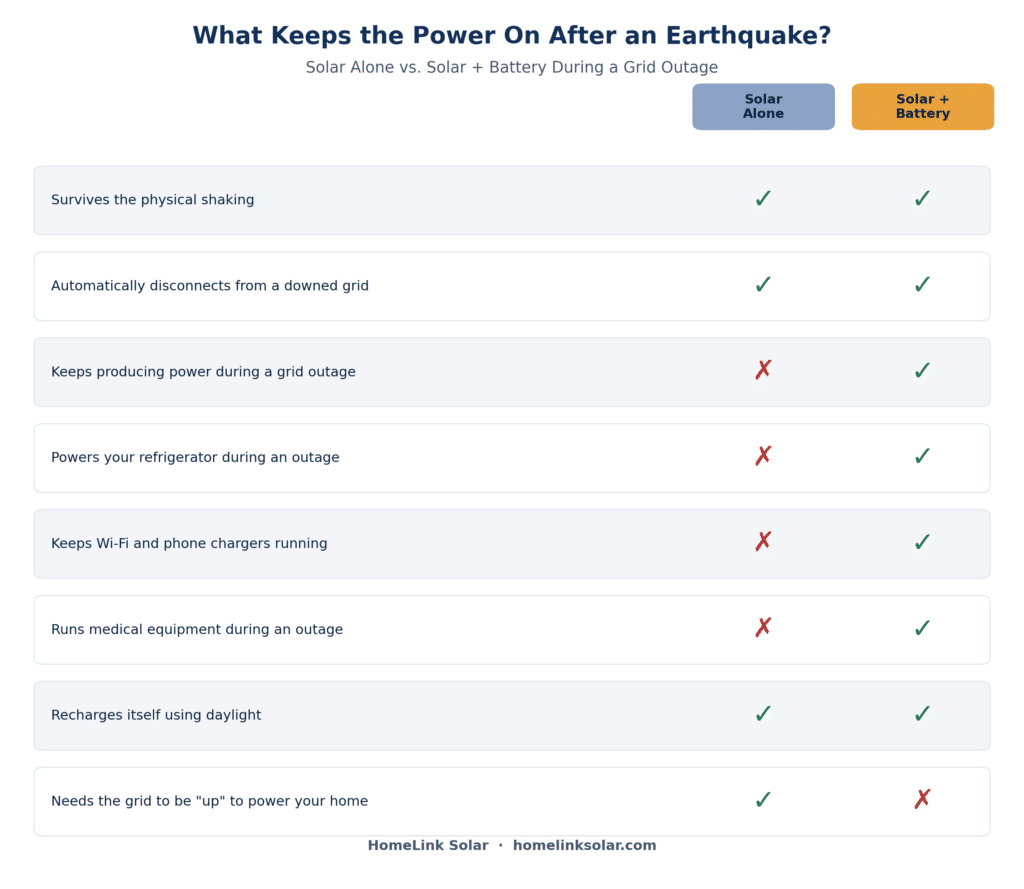
This is the part that surprises most homeowners, and it has nothing to do with earthquake damage. Standard grid-tied solar systems are required to shut down automatically the instant the grid loses power. This is a federal safety rule, sometimes called anti-islanding protection, built into UL 1741 and IEEE 1547 standards. It exists so that utility crews working to restore downed lines aren’t put at risk by a home system backfeeding electricity into a line they believe is dead.
That means a 100 percent intact, undamaged solar array will still go dark during a grid outage, earthquake-caused or otherwise, unless it’s specifically paired with a battery system designed to disconnect from the grid and power your home independently. This single fact is behind more post-earthquake confusion than almost anything else in solar. We cover the mechanics of post-earthquake grid outages in more detail in What Happens if the Power Goes Out After an Earthquake?
What’s the Difference Between Solar and Solar-Plus-Battery?
Solar alone generates electricity whenever the sun is out and the grid is up. It’s sized around your everyday usage and offsetting your utility bill, not around keeping your home running independently. Solar-plus-battery adds a second system: a battery that stores energy and, critically, includes the equipment needed to disconnect your home from the grid and power it directly, a process called islanding.
The distinction that matters most after an earthquake is which loads the battery is actually designed to carry. Two common approaches:
- Critical loads backup: A subpanel powers a chosen set of circuits, refrigerator, Wi-Fi router, a few outlets and lights, medical equipment. This is the more affordable option and covers what most households actually need during an outage.
- Whole-home backup: A larger battery system, often multiple units, sized to run most or all of the home’s circuits, including air conditioning. Costs more, but removes the need to choose which rooms get power.
According to the California Public Utilities Commission, a single home battery can typically power priority circuits for 24 to 48 hours during an outage. Paired with solar, the battery recharges during daylight hours and can extend that runtime for as long as the outage lasts, which matters given that a major earthquake can knock out power for days in the hardest-hit areas, not just hours.
Should I Get My Solar System Inspected After a Major Quake?
Yes, even if your production numbers look normal and nothing looks obviously wrong. Shaking strong enough to be felt can loosen mounting hardware, stress conduit connections, or shift a battery enclosure without producing any visible sign from the ground. An inspection is quick, and most of it doesn’t require anyone to get on your roof.
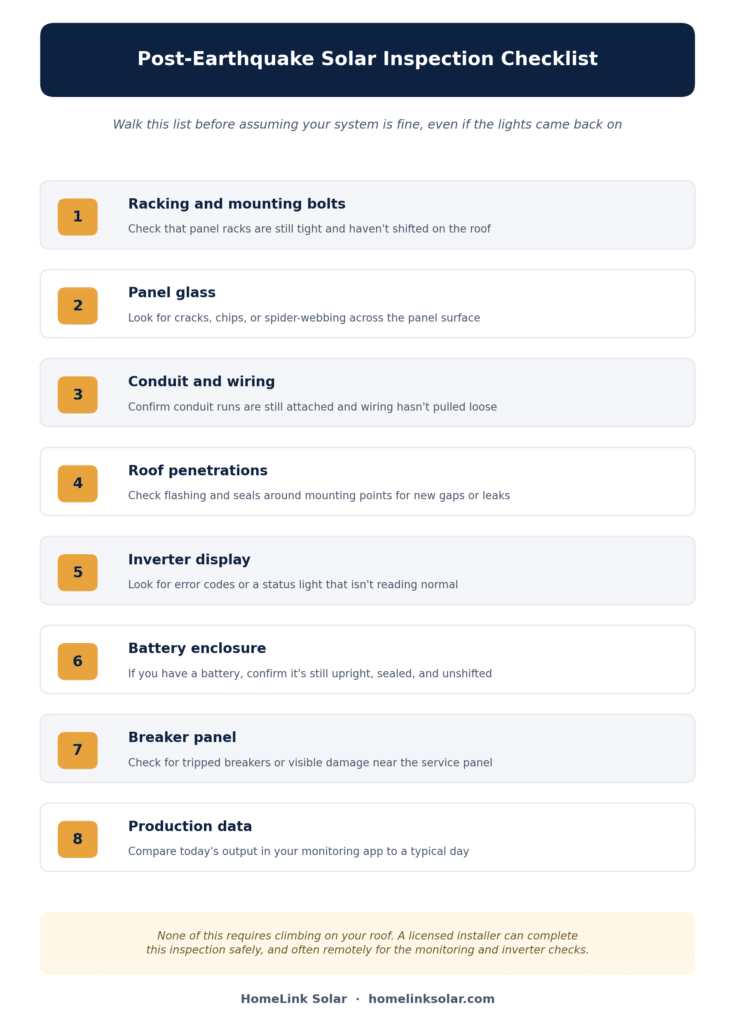
At minimum, check racking and mounting bolts, panel glass for cracks or chips, conduit and wiring connections, roof penetration seals, your inverter’s status display, the battery enclosure if you have one, your breaker panel, and your monitoring app’s production data against a typical day. If anything looks off, or if you’re simply not sure, use the CSLB’s public license lookup to confirm you’re working with a properly licensed contractor before anyone touches the system.
Sizing a Battery With Earthquakes Specifically in Mind
Backup sizing for a general power outage and backup sizing for an earthquake scenario overlap, but earthquake-specific planning adds a few considerations worth naming directly. Aftershocks can continue for days or weeks, so a battery that only covers a few hours may not carry you through the period when repeat outages are most likely. Communication matters more than usual, since cell networks can be congested and Wi-Fi-based calling becomes a real fallback. And if anyone in the home depends on refrigerated medication or powered medical equipment, that load needs to be explicitly included in the critical loads panel, not assumed. This is exactly the kind of planning covered in our full guide, How to Prepare Your Home for a Major California Earthquake.
Does HomeLink Solar Inspect Existing Solar Systems After an Earthquake?
Yes. HomeLink Solar (CSLB License #1117534) inspects existing solar and battery systems, not just installs we originally performed, following a major seismic event. Owner Mandy oversees installs and service calls personally, and every inspection is handled without subcontractors. If you’re not sure whether your system needs a closer look, or if you want a straightforward answer on your battery backup options before the next major quake, our team can walk through it with you.
FAQs
Are solar panels damaged by earthquake shaking?
Generally no, in a properly engineered system. Solar racking is designed to the same lateral force standards used for wind, and aluminum racking flexes rather than breaks. Industry surveys have found no widespread pattern of earthquake damage to solar installations, though roof-mounted systems depend on the underlying roof’s structural condition.
Why don’t solar panels alone provide power during an outage?
Federal safety rules require grid-tied solar systems to shut off automatically during a power outage, a rule called anti-islanding protection. It protects utility repair crews from a home system backfeeding electricity into lines they believe are de-energized. Only a system paired with a battery, specifically designed to disconnect and power your home independently, can keep the lights on during an outage.
What’s the difference between solar and solar-plus-battery?
Solar alone generates power when the sun is out and the grid is up, offsetting your utility bill. Solar-plus-battery adds stored energy and the equipment needed to disconnect from a downed grid and power your home directly, either a chosen set of critical circuits or the whole house, depending on how the system is designed.
Should I get my solar system inspected after a major quake?
Yes. Mounting hardware, conduit connections, and battery enclosures can shift or loosen without any visible sign from the ground. A quick inspection, much of which can be done without climbing on the roof, confirms nothing was compromised.
Does HomeLink Solar inspect existing solar systems after an earthquake?
Yes, including systems HomeLink did not originally install. CSLB License #1117534, no subcontractors, and every inspection overseen personally by owner Mandy.
Related Reading
This piece focuses specifically on solar equipment. For the full picture on preparing your home and family, see How to Prepare Your Home for a Major California Earthquake. For a deeper look at why the grid itself goes down and how long outages actually last, see What Happens if the Power Goes Out After an Earthquake?
Sources
- USGS / Earthquake Country Alliance — California earthquake probability (UCERF3)
- Solar Power World — Designing Solar Projects to Withstand Earthquakes
- Structural Engineers Association of California — seaoc.org
- California Public Utilities Commission — Public Safety Power Shutoff FAQs
- CSLB — Public license lookup
- Wikipedia — 2019 Ridgecrest earthquakes
- SSEC/CIMSS — Ridgecrest power outage satellite analysis