Going solar is a significant financial decision, and for many California homeowners, the real fear is not the technology or the cost estimate. It is the question of who actually shows up to install the system, who owns the warranty, and who picks up the phone when something goes wrong three years later. Large national providers have streamlined their sales funnels, but that polish does not always translate into clear accountability on the job site.
This guide helps you evaluate solar installers in California on the factors that matter most after the contract is signed: transparency about who does the work, how permits and inspections are handled, what your warranties actually cover, and how to structure your decision so you do not end up stuck.
The real risk with high-volume solar providers
National solar companies operate at scale. To manage that volume, many rely on regional subcontractors to handle installations in markets outside their core operational footprint. That model is not inherently wrong, but it creates specific accountability gaps that homeowners should understand before signing anything.
The most common failure points appear at handoff boundaries. The company you signed with may handle sales and customer service, while a separate entity designs the system, and yet another installs it. When something goes wrong, which is more common than most installers advertise, the responsibility question becomes genuinely murky. Who covers a roof penetration that leaks two years post-install? Which entity’s workmanship warranty applies when the subcontractor is no longer active in your area?
Even when subcontractors are qualified, slower issue resolution is a documented pattern in high-volume models. Escalation paths through national call centers add time and distance between you and the person who can actually fix the problem.
Questions to ask before you sign any solar contract
The best time to evaluate accountability is before you commit. These questions are non-negotiable when choosing a solar installer in California:
- Who will design my system, and are they on your staff or a third party?
- Who will physically install the system and do the electrical work?
- Who handles permitting and the Permission to Operate (PTO) application with my utility?
- Are you using subcontractors for any part of this project? If yes, for which scope, and what warranty coverage applies to their work specifically?
- After installation, who do I contact for service? What is the expected response time?
- Can you provide your contractor license number, classification, and current insurance certificates before I sign?
Ask for a written warranty schedule that separately lists workmanship coverage and equipment coverage. If a company hesitates to provide that before contract signing, that is a meaningful signal.
Verifying a contractor’s legitimacy in California
California has a formal licensing and regulatory system for contractors. The Contractors State License Board (CSLB) protects California consumers by licensing and regulating the state’s construction industry, and it licenses approximately 285,000 contractors across 45 different classifications. For solar, the relevant classifications are typically B (General Building), C-10 (Electrical), and C-46 (Solar).
You can verify any contractor’s license status, classification, and complaint history directly at the CSLB website. The CSLB also maintains a “Going Solar” consumer education section specifically designed to help homeowners be “Solar Smart” when evaluating installers.
For additional installer credentialing, look for technicians or project managers who hold NABCEP (North American Board of Certified Energy Practitioners) certification. NABCEP provides a consumer-facing directory through its website and references independent installer review resources such as SolarReviews for homeowner research. NABCEP certification is not required to install solar in California, but its presence signals that at least some of the team has passed a rigorous, third-party competency assessment.
If the company cannot provide a CSLB license number on request, or if the license is expired or in a classification not appropriate for solar electrical work, do not proceed.
How solar installation actually works in California (and where delays happen)
A typical California residential solar project moves through these milestones: site assessment, system design and engineering, permit application to your local jurisdiction, utility interconnection application, physical installation, inspection by the local authority having jurisdiction (AHJ), and finally Permission to Operate (PTO) from your utility.
PTO is the milestone that grants you legal permission to turn the system on and begin exporting power to the grid. It is also the step most likely to drag when accountability is fragmented. Permit delays often occur when the engineering documents are incomplete or when the subcontractor who submitted them is not responsive to correction requests. Inspection failures extend timelines when the crew that installed the system is not the same crew that shows up to correct deficiencies.
At each milestone, you can request documented proof: a copy of the permit, the utility interconnection application confirmation number, and the inspection sign-off. Any installer unwilling to share these documents on request should raise concern.
Contract terms that protect you long-term
Solar contracts vary significantly. A few specific things to review before signing:
Payment schedules should be tied to project milestones, not to calendar dates. Paying a large portion upfront with no linkage to installation completion or PTO removes your leverage if the project stalls.
If you are financing through a solar loan, verify whether the loan is attached to your home (a PACE or HERO-style product secured against the property) or is an unsecured personal loan. Property-secured financing can complicate future home sales and refinancing, so understand the structure before you sign.
Review the early termination and transferability terms. Some lease and power purchase agreement (PPA) structures require buyout provisions or homebuyer approval for transfer. If the system is owned outright (purchased or financed via an unsecured loan), transferability is simpler.
Look for workmanship warranty language specifically. “We guarantee our work” is not a warranty. A written workmanship warranty should state a duration, what it covers (roof penetrations, wiring, mounting hardware, system performance), and who specifically is responsible for honoring it.
What solar warranties actually cover (and what they do not)
There are at least three distinct warranty layers in a residential solar installation. Confusing them is how homeowners end up with a coverage gap.
Equipment warranties come from the manufacturers: typically 25 years for panel performance, 10 to 12 years for inverter products (with extended options available), and separate battery warranties from manufacturers like Tesla (Powerwall) or Enphase. These are manufacturer obligations, not installer obligations.
Workmanship warranties cover the quality of the installation itself: roof penetrations, conduit runs, electrical connections, and system commissioning. This warranty belongs to the installer, and its duration and terms vary. A 10-year workmanship warranty is a reasonable benchmark for a quality residential installation.
Monitoring and support expectations fall outside both of those warranty categories. If your inverter or battery management system sends an alert, who responds, and how quickly? If your system underperforms for a full billing cycle, does your installer investigate proactively or wait for you to call? These are service-level questions, and they should be answered in writing before you sign.
For battery backup systems specifically, “backup power” means different things depending on how the system is configured. A whole-home backup setup covers all circuits. A partial-home or “essential loads” configuration covers only selected circuits (refrigerator, lights, outlets in specific rooms). Make sure your installer specifies which circuits are backed up, how the automatic transfer switch behaves during an outage, and how the system is tested and commissioned before they leave your property. If you are using Tesla Powerwall equipment, the Tesla app provides real-time monitoring of backup readiness, charge state, and outage history. Confirm your installer will walk you through app setup and support you with monitoring questions post-installation.
Comparing quotes fairly
When you receive multiple quotes, you need a consistent framework. Compare system size in kilowatts (kW) and expected annual production in kilowatt-hours (kWh), not just price. A lower-cost quote for a smaller system may deliver less value over 25 years.
Confirm what is included: inverter brand and model, battery brand and capacity (if applicable), racking system, electrical panel upgrade (if needed), and permit fees. Quotes that omit any of these categories are not complete and cannot be accurately compared.
Production estimates should reference your roof orientation, shading conditions, and California-specific solar resource data. Ask which software tool was used for production modeling (common options include PVWatts, Aurora, or Helioscope). Vague “expected savings” language with no production figure attached is a red flag.
If a company will not provide a written quote with equipment specifications before collecting your personal information or requiring a consultation deposit, that structure is designed to funnel you, not inform you.
Local vs. national: what the difference looks like in practice
The practical question for homeowners is not about company size in the abstract. It is about who is reachable, accountable, and motivated to resolve your issue when it arises.
A local installer with in-house design and installation crews means fewer handoffs between the team that sold you the system, the team that designed it, and the team that built it. When those functions are all internal, there is a single point of accountability. The people who installed your system are the same people who respond when something needs attention.
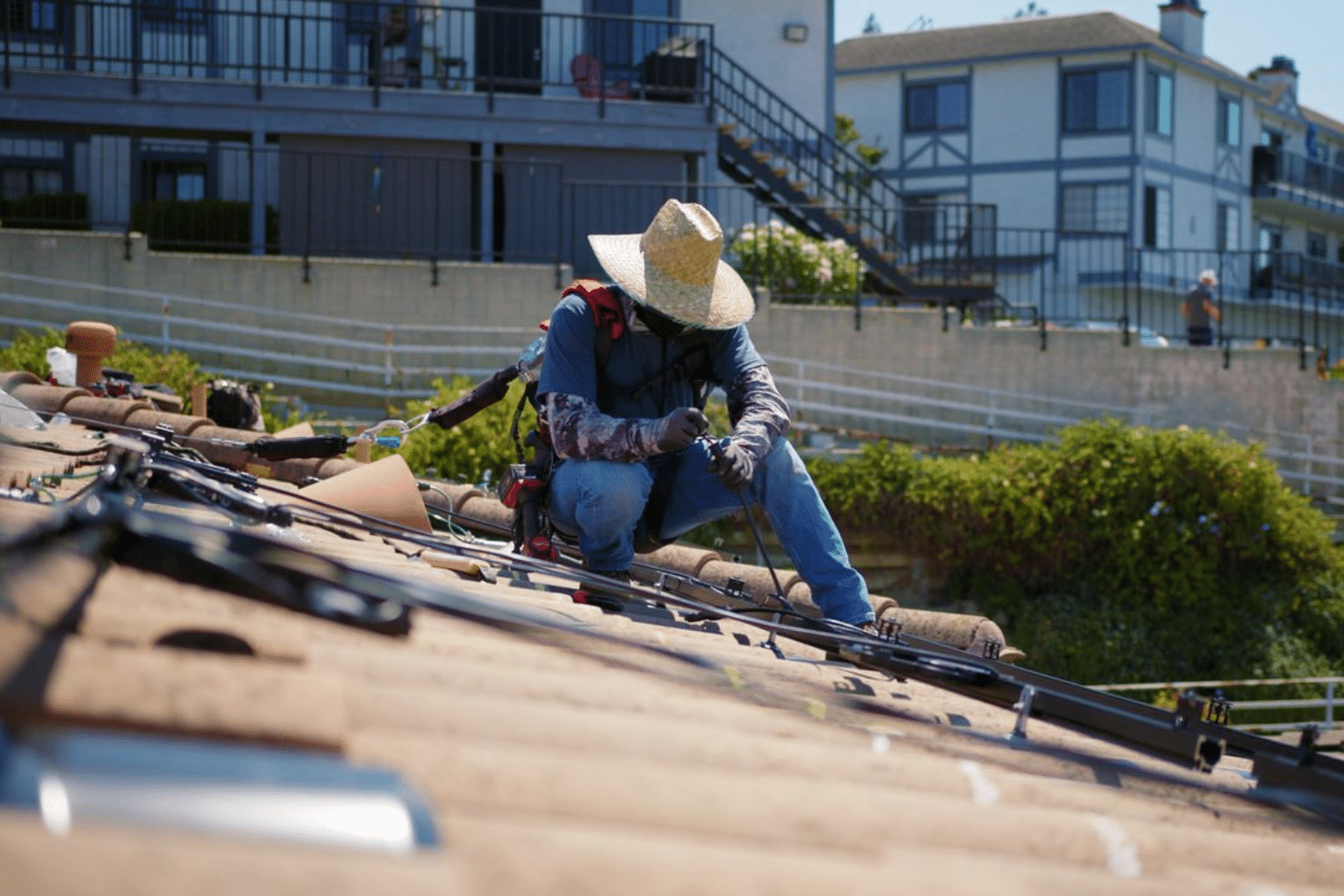
HomeLink Solar operates on exactly this model. As a California-based, family-owned company serving Southern California markets including Chino, San Bernardino, Corona, and Pomona, the company uses no subcontractors. Design, planning, and installation are all handled in-house by the same team. The majority of project sites are within 90 minutes of the company’s home base, which means faster response to both pre-activation questions and post-installation service needs. For homeowners who want direct communication with the people responsible for their installation, rather than a national call center, that structure addresses the core accountability concern directly.
Your decision checklist
Before you sign with any solar installer in California, verify these items:
- Confirm the contractor’s CSLB license number and appropriate classification at cslb.ca.gov.
- Ask specifically whether subcontractors will be used and, if so, get their license numbers and the warranty coverage that applies to their scope.
- Request a written warranty schedule that separately addresses workmanship and equipment coverage, with durations and responsible parties named.
- Confirm who handles permitting and the PTO application, and ask for confirmation numbers at each milestone.
- Review payment terms: amounts should be tied to project milestones, not calendar dates.
- Get a complete written quote with equipment specifications, production estimates, and all included scope before providing personal information or a deposit.
- For battery backup systems, ask which circuits are covered, how the automatic transfer switch behaves, and how the system will be commissioned and tested.
The goal is not to find a company with the most impressive branding or the lowest headline number. It is to find an installer who can tell you, in writing, exactly who will do the work, what they are responsible for, and how to reach them when you need them.