Ask most homeowners why they’re considering a battery and the answer is usually the same: outages. That’s a real and growing reason, covered across our preparedness library linked throughout this piece. But it’s no longer the only reason, and arguably not even the biggest one anymore. A genuine shift in California’s electricity policy, insurance market, and rate structure has been quietly making backup power look less like an emergency purchase and more like a standard part of owning a home here. This piece covers all of it, not just the outage angle.
Why Are More California Homeowners Investing in Backup Power?
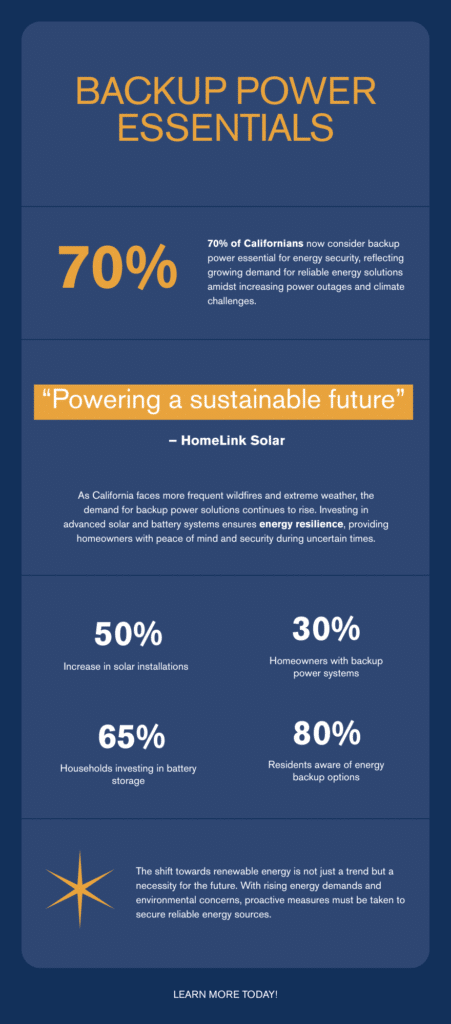
Four separate trends are converging at once: more frequent planned outages, a policy change that rewrote solar economics overnight, electricity rates rising faster than almost anywhere else in the country, and a homeowners insurance market that’s retreating from wildfire-exposed areas. No single one of these would fully explain the shift on its own. Together, they add up to a real change in what it means to own a home in California.
What’s Driving the Rise in Outages and Shutoffs Across the State?
Public Safety Power Shutoffs are the most visible driver. These are deliberate, forecast-based outages that utilities call during dangerous fire weather, and they’ve become a regular feature of fall and winter in SCE and SDG&E territory rather than a rare emergency measure. We cover exactly what triggers one and how long they actually last, with real CPUC-reported data, in What Is a Public Safety Power Shutoff?, How to Prepare for California PSPS Power Shutoffs, and How Long Do PSPS Power Shutoffs Really Last in California? Underneath PSPS sits a harder structural problem: aging grid infrastructure built for a different climate, now operating in a state with longer, more intense wildfire seasons than the system was originally designed around.
The Financial Shift: How NEM 3.0 Made Batteries Almost Standard
This is the part of the story most outage-focused articles miss entirely. In April 2023, the California Public Utilities Commission replaced the old net metering program with a new net billing tariff, widely known as NEM 3.0. It cut the compensation homeowners get for exporting excess solar power to the grid by roughly 75%, from around 30 cents per kWh down to roughly 8 cents. That single change restructured the financial logic of going solar: exporting power you don’t use is now worth far less, while storing it in a battery to use yourself, especially during expensive evening peak pricing, became the better financial move for most households.
The market responded immediately. According to a Lawrence Berkeley National Laboratory technical brief, the share of new California residential solar installations that also included a battery jumped from roughly 10% before NEM 3.0 to approximately 60% by 2024. That’s not a resilience trend, that’s a financial one: batteries went from an optional add-on to close to the default configuration in under two years, because the math on solar-only systems simply changed.
California’s Electricity Rates Are Rising Faster Than the Rest of the Country
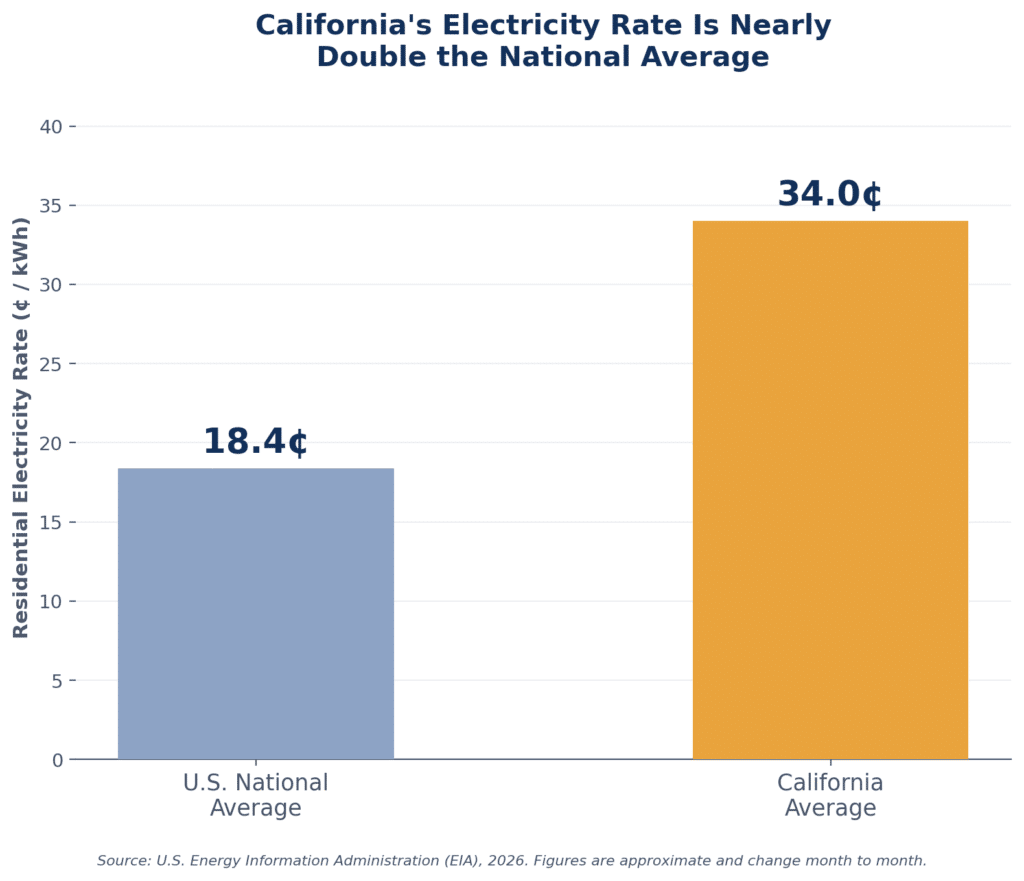
The backdrop to all of this is that electricity itself has gotten significantly more expensive in California. According to the U.S. Energy Information Administration, via EnergySage’s California-specific data, the state’s average residential electricity rate now runs close to double the national average, driven in part by wildfire mitigation spending, infrastructure hardening, and grid modernization costs that get passed through to ratepayers. Most major utilities have also shifted to Time-of-Use pricing by default, meaning the price of a kWh can swing dramatically higher during the same 4 to 9 PM window that a PSPS is most likely to hit. A battery doesn’t just provide backup during an outage, it lets a household shift consumption away from the most expensive hours of an increasingly expensive rate structure.
The Insurance Market Is Changing Too
Worth naming directly, even though it’s a separate issue from power itself: several major insurers, including State Farm and Allstate, have paused or pulled back new homeowners policies in California specifically over wildfire risk in recent years. A home battery doesn’t reduce fire risk to a structure and won’t directly lower a premium. But it’s part of the same broader pattern: California homeowners are increasingly expected to take on more direct responsibility for their own resilience, whether that’s hardening a home against fire, self-insuring against gaps in coverage, or making sure the power stays on when the grid can’t guarantee it will.
Is Backup Power Only Relevant During Emergencies, or Does It Help Day to Day?
Under NEM 3.0’s Time-of-Use pricing, a battery earns its keep on ordinary Tuesdays, not just during a PSPS. Charging from solar during the day and discharging during the 4 to 9 PM peak window, when rates can run two to three times higher than off-peak pricing, is a routine cost-saving habit, not an emergency behavior. The outage-readiness is a byproduct of a system that’s already working for you daily, not a separate feature you’re paying extra for and hoping never to use.
How Does Backup Power Affect Home Value?
Positively, with one important caveat. A frequently cited study referenced by the National Renewable Energy Laboratory found that home value increases by roughly $20 for every $1 reduction in annual utility bills, meaning a system saving a household $700 a year could add somewhere in the range of $14,000 in value. More recent market analysis has found homes with owned solar sell for meaningfully more than comparable homes without it, with some estimates in the range of 5 to 10%, and standalone standby generators are commonly cited as adding 3 to 5% to resale value in storm- or outage-prone markets. The caveat: this premium applies most reliably to owned systems. Leased solar and subscription-based batteries don’t consistently show the same resale bump, since the next buyer inherits a monthly payment obligation rather than a paid-off asset.
What Backup Power Options Does HomeLink Solar Offer for California Homes?
HomeLink Solar (CSLB License #1117534) designs solar-plus-battery systems built around both sides of this story: real outage protection sized to your household’s critical circuits, and real day-to-day savings under NEM 3.0’s rate structure. We emphasize ownership and fixed-payment pathways where available, since that’s the structure most consistently associated with the home value benefits described above. Owner Mandy oversees every install personally, with no subcontractors. See how we rank against a national subscription model in HomeLink vs. Sunrun, explore no-large-upfront-cost options through our Power Choice Program, real completed installs on our our installs page, or get a free personalized quote.
FAQs
Why are more California homeowners investing in backup power?
Four converging trends: more frequent PSPS events, NEM 3.0’s rewrite of solar export economics, electricity rates rising toward double the national average, and a retreating homeowners insurance market pushing more responsibility onto homeowners directly.
What’s driving the rise in outages and shutoffs across the state?
Public Safety Power Shutoffs, called during dangerous fire weather, plus aging grid infrastructure operating in longer, more intense wildfire seasons than it was originally built for.
Is backup power only relevant during emergencies, or does it help day to day?
It helps daily. Under NEM 3.0’s Time-of-Use pricing, charging a battery from solar and discharging during the expensive evening peak window is a routine money-saving habit, with outage protection as a built-in byproduct.
How does backup power affect home value?
Generally positively for owned systems, with studies suggesting a meaningful resale premium, though leased or subscription systems don’t show the same consistent benefit.
What backup power options does HomeLink Solar offer for California homes?
Solar-plus-battery systems sized around your household’s critical circuits and built with an emphasis on ownership, with owner Mandy personally overseeing every install.
Related Reading
See What Is a Public Safety Power Shutoff?, How to Prepare for California PSPS Power Shutoffs, How Long Do PSPS Power Shutoffs Really Last in California?, and Best Backup Power Options During Wildfires. For full household preparedness, see 25 Things Every California Family Should Have Before the Next Power Outage and The Ultimate Home Emergency Checklist.
Sources
- Lawrence Berkeley National Laboratory / Utility Dive — Residential Solar + Storage Surged in California After NEM 3.0
- EnergySage — California Electricity Rates (EIA-sourced data)
- United Policyholders — Allstate Halting Home Insurance Policies in California
- NREL / Appraisal Journal (as cited by multiple industry sources) — home value impact of reduced utility bills