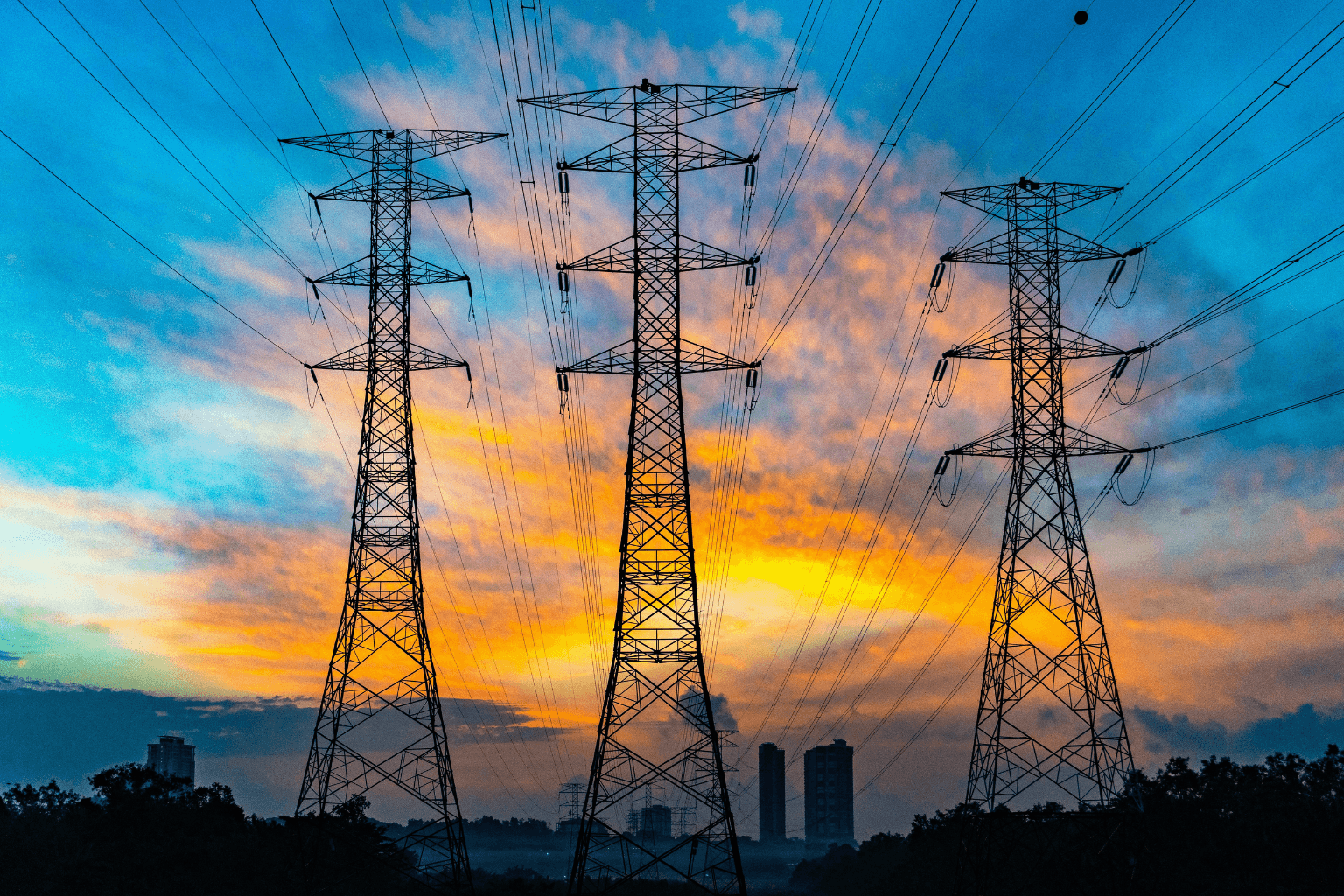
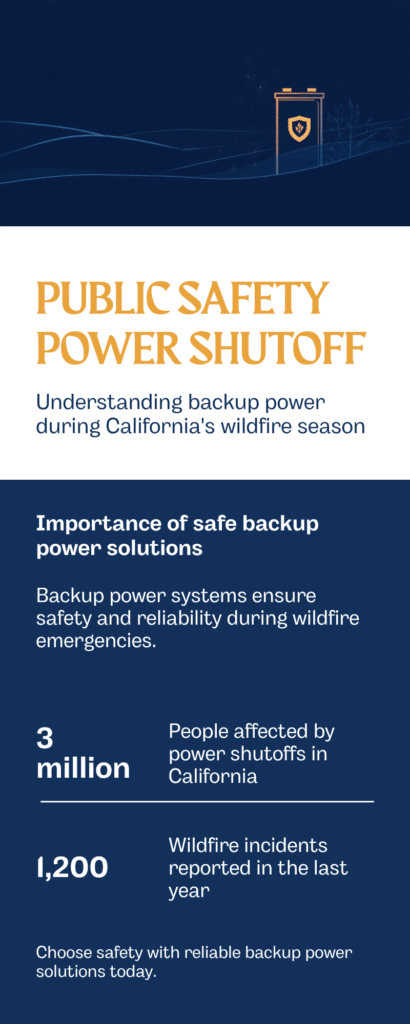
A Public Safety Power Shutoff (PSPS) is when a utility like SCE or SDG&E deliberately cuts power to specific circuits during high fire-risk weather, strong winds, low humidity, dry vegetation, to prevent their own equipment from sparking a wildfire. We cover exactly what triggers one, how much notice you get, and how to prepare in our full guide, How to Prepare for California PSPS Power Shutoffs. This piece picks up where that one leaves off, on the question that actually matters once the power is out: which backup power option is safe to use during wildfire conditions specifically, because the answer isn’t the same as it would be for an ordinary storm outage.
Why Wildfire Season Changes the Backup Power Calculus
A PSPS happens precisely when conditions are driest and windiest, which is also exactly when a poorly placed generator is most dangerous. During an ordinary winter storm outage, a gas generator is an inconvenience to manage safely. During a PSPS, the same generator is operating in the exact fire-weather conditions, dry fuel, wind, low humidity, that the shutoff itself was called to prevent. That’s the core reason this deserves its own guide instead of generic outage advice.
What’s the Safest Backup Power Option During Wildfire Season?
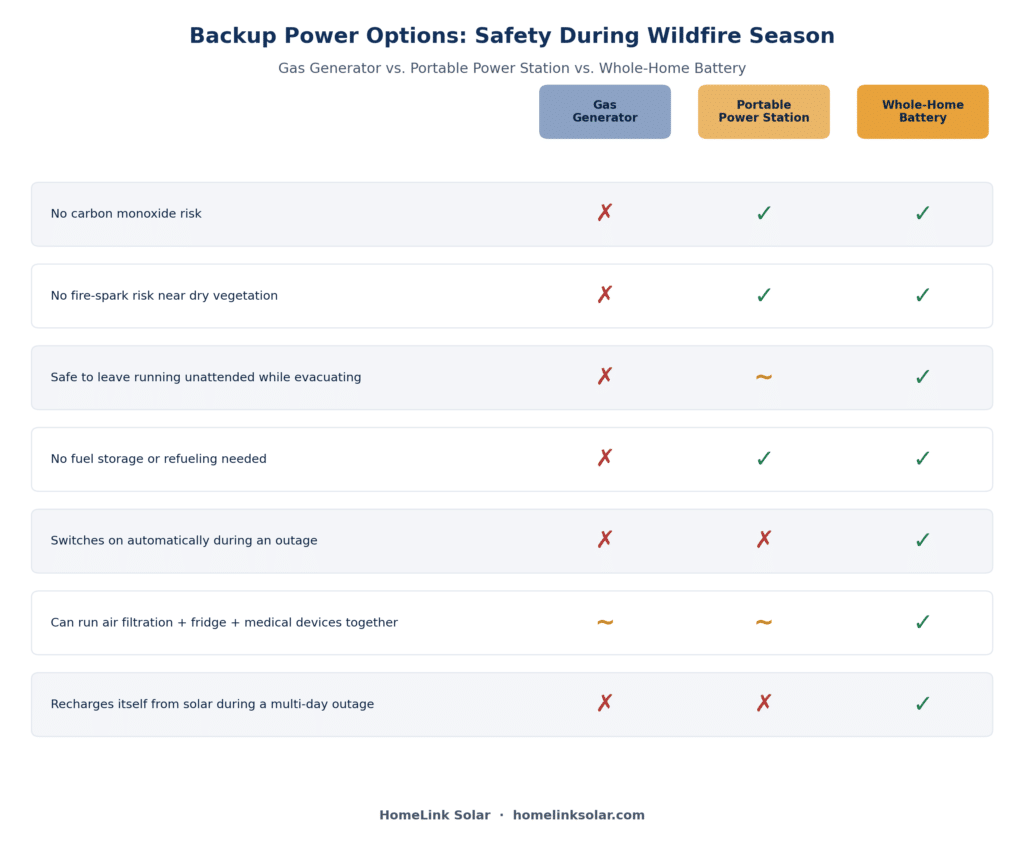
A whole-home or critical-loads battery system, ideally paired with solar, is the safest option by a meaningful margin, for reasons that go beyond convenience. It produces no exhaust, carries no fuel to store or spill, generates no sparks, and can be left running unattended, which matters directly if a PSPS escalates into an evacuation order. Portable power stations (battery packs without solar) are a reasonable middle option: safe in terms of fire and CO risk, but limited in capacity and unable to recharge themselves once depleted unless you add a portable solar panel. Gas and propane generators sit at the bottom of the safety ranking specifically for wildfire conditions, not because they don’t work, but because of two risks that are unusually elevated during a PSPS: carbon monoxide poisoning and fire ignition.
Why Are Generators Risky to Use During a Wildfire Evacuation Warning?
Two separate hazards, both worth taking seriously. First, carbon monoxide: according to the U.S. Consumer Product Safety Commission, more than 100 people die each year from carbon monoxide poisoning linked to portable generators, and a single portable generator produces roughly as much carbon monoxide as hundreds of cars. CPSC guidance is unambiguous: generators must run outside only, at least 20 feet from the home, with exhaust directed away from doors and windows.
Second, and specific to wildfire conditions: fire risk from the generator itself. According to safety guidance referencing the Portable Generator Manufacturers’ Association, operating a generator during wildfire-risk weather means maintaining a cleared radius of at least 5 feet around it, free of dry leaves, grass, and other combustibles, and never covering it with a tarp or cloth that could trap heat against a hot engine. CAL FIRE’s defensible space standards require a 100-foot cleared zone around structures for exactly this reason, a hot engine or spark-producing exhaust is a genuine ignition source in dry, windy conditions.
Then there’s the evacuation problem itself: a running generator, especially one that’s been fueled recently, isn’t something you can simply walk away from safely, and it’s not something most people think to shut down properly in the adrenaline of an evacuation order. A battery system has no equivalent failure mode. You can leave a house with a battery running indefinitely and it introduces zero additional risk to your property or to firefighters.
Can a Home Battery System Run Air Filtration During Smoke Events?
Yes, comfortably. Wildfire smoke doesn’t only threaten homes near the fire line, fine particulate matter (PM2.5) can travel and degrade indoor air quality for miles around, which is why the EPA recommends running a HEPA air purifier and creating a “clean room” during smoke events, in addition to sealing windows and doors. A typical HEPA room air purifier draws roughly 40 to 100 watts, a small fraction of what a home battery is designed to carry. Running an air purifier alongside your refrigerator, Wi-Fi, and phone charging, a standard critical-loads setup, adds negligible strain to a properly sized battery system. This is a case where a PSPS and wildfire smoke can overlap: the power goes out because of the same fire risk that’s also degrading your outdoor air, and battery backup addresses both at once.
How Does Whole-Home Battery Backup Compare to Portable Power Stations?
Portable power stations, essentially large rechargeable battery packs with built-in outlets, are useful for camping, small appliances, or emergency phone charging, but they’re a different category of product from a home battery system in three ways. Capacity: most consumer portable power stations range from roughly 1 to 3 kWh, compared to 10 to 15 kWh for a single home battery like a Tesla Powerwall 3 or FranklinWH aPower 2, we cover the exact numbers in How Long Can a Home Battery Power Your House? Integration: a home battery is wired into your electrical panel and switches on automatically the instant the grid goes down; a portable power station has to be manually connected to whatever you want to run. Recharging: without a dedicated solar panel accessory, most portable power stations only recharge from a wall outlet, which does you no good during the outage itself. They’re a legitimate option for a single room or a small critical load, but not a substitute for whole-home or critical-circuit backup during a multi-day PSPS event.
What Backup Power Systems Does HomeLink Solar Install for Wildfire Season?
HomeLink Solar (CSLB License #1117534) designs solar-plus-battery systems specifically around California wildfire and PSPS risk, not a generic backup package. That means sizing the battery around your actual critical loads, refrigeration, medical equipment, air filtration, communication, and pairing it with solar so it recharges through multi-day events rather than draining once and going dark. Owner Mandy oversees every install personally, with no subcontractors. If you’re in a high fire-risk area and want a straightforward, no-pressure answer on what a properly sized system would look like for your specific home, our team can walk you through it. See real completed installs on our our installs page, explore no-large-upfront-cost options through our Power Choice Program, or get a free personalized quote.
FAQs
What’s the safest backup power option during wildfire season?
A whole-home or critical-loads battery system, ideally paired with solar. It produces no exhaust or sparks, requires no fuel storage, and can be left running unattended if you need to evacuate, none of which is true of a gas generator.
Why are generators risky to use during a wildfire evacuation warning?
Two reasons: carbon monoxide poisoning, which the CPSC links to more than 100 deaths a year from portable generators, and fire ignition risk from hot engine surfaces or sparks near the dry vegetation and wind that define PSPS-triggering conditions in the first place.
Can a home battery system run air filtration during smoke events?
Yes. A typical HEPA air purifier draws only 40 to 100 watts, a small addition to a properly sized battery system that’s also running your refrigerator, Wi-Fi, and phone charging.
How does whole-home battery backup compare to portable power stations?
Home batteries hold roughly 5 to 10 times the capacity of most portable power stations, wire directly into your panel to switch on automatically, and can recharge from solar during an outage. Portable power stations are useful for small, single-device needs but aren’t a substitute for whole-home or critical-circuit backup.
What backup power systems does HomeLink Solar install for wildfire season?
Solar-plus-battery systems sized around your household’s actual critical loads and California wildfire risk specifically, with owner Mandy personally overseeing every install and no subcontractors involved.
Related Reading
This piece is part of our wildfire and outage preparedness library. See How to Prepare for California PSPS Power Shutoffs for the full breakdown of triggers and notification timelines, and our earthquake and outage series: How to Prepare Your Home for a Major California Earthquake, What Happens if the Power Goes Out After an Earthquake?, Can Solar Panels Still Work After an Earthquake?, and How Long Can a Home Battery Power Your House? Also see our Power Choice Program and HomeLink vs. Sunrun.
Sources
- CPSC — Carbon Monoxide Information Center
- CPSC — Wildfire Season Safety (Neighborhood Safety Network)
- GenTent Safety Canopies, citing PGMA — Can You Run a Generator During a Wildfire?
- CAL FIRE — Defensible Space
- EPA — Wildfires and Indoor Air Quality