That initial excitement when you start researching solar is real. You run the numbers on your SCE or SoCalGas-connected bill, you see what neighbors are paying after going solar, and you start thinking seriously about making the switch. Then someone mentions that the big national company you’ve been talking to uses outside crews to do the actual installation work, and suddenly the whole thing feels less like a home improvement project and more like a gamble.
That reaction isn’t paranoia. It’s pattern recognition.
This post won’t tell you that all subcontracted solar work is bad or that every national brand is a scam. What it will do is give you the technical and contractual lens to ask the right questions before you sign anything, so you know exactly who is accountable for what, long after the permits are closed and your system is live on the grid.
The question isn’t “do they use subcontractors?”, it’s “who owns the risk?”
Most homeowners frame this the wrong way. They ask who installs their solar panels and stop there. A better question is: who is contractually responsible when something goes wrong six months after installation?
In a vertically integrated installation model, the same company that sold you the system also designed it, pulled the permits, handled utility interconnection, and sent the crew to your roof. One entity owns the entire chain of responsibility. When you call about a production discrepancy or a roof penetration issue, that call goes to the same organization that made every decision on your project.
In a sales-first national model, those functions get distributed. A sales rep signs you up. A third-party design firm produces the system layout. A subcontracted field crew does the installation. The permit might be pulled under the primary contractor’s license, but the workers on your roof may be employees of a completely separate company. When something goes wrong, you’re dealing with fragmented ownership: the installer says the design was wrong, the design team says the installation deviated from spec, and you’re the one holding the bag.
The U.S. Department of Energy’s consumer guide on choosing a solar installer (published August 2021) specifically calls out warranty coverage and post-installation responsibility as factors homeowners must clarify before signing. That’s federal-level guidance acknowledging that accountability after the sale is a real and known issue in residential solar.
The technical term for what you’re trying to avoid is a broken responsibility chain. Each link in that chain: design responsibility, electrical scope authorization, workmanship warranty ownership, and service dispatch authority, needs to point back to one entity that you can actually reach and hold responsible.
Three verification steps before you sign anything
Step 1: Confirm the license matches the scope of work
California requires solar installation contractors to hold a valid license from the Contractors State License Board (CSLB). The relevant classifications are typically C-46 (Solar Energy) and C-10 (Electrical), depending on the scope. If a company is pulling permits and doing the electrical connection to your panel, they need the right license for that work.
The CSLB provides a free online tool called “Check A License” at cslb.ca.gov that lets you enter a contractor license number and verify its current status, classifications, and any disciplinary actions. Use it. Ask every installer you’re seriously considering for their CSLB license number, then go verify it yourself. A legitimate installer will hand that number over without hesitation.
If you’re told the installation will be performed by a different company than the one you’re contracting with, ask for that subcontractor’s license number too, and verify it separately. This step alone eliminates a significant portion of the risk around unlicensed or improperly classified crews.
Step 2: Get clear answers on permits, inspections, and interconnection
Residential solar in California goes through a multi-step permitting and utility approval process. First, the city or county building department reviews and issues a permit. Then the installation happens. Then there’s a final inspection by the authority having jurisdiction (AHJ). After that passes, the utility processes the interconnection agreement before your system can legally export power to the grid.
Every one of those handoffs is a potential gap. Ask your installer specifically:
- Who pulls the building permit, and under whose license number?
- Who is responsible for scheduling and attending the final inspection?
- Who manages the interconnection application with your utility, and who resolves it if it gets kicked back?
- If there’s a correction required after inspection, which entity sends someone out to fix it?
Good answers are specific. You want to hear the name of a role or a process, not “we handle all of that.” Vague assurances that everything is “taken care of” are a red flag, not a comfort.
Step 3: Understand what your warranty actually covers and who enforces it
There are two distinct warranty types in solar: equipment warranties (from panel, inverter, and racking manufacturers) and workmanship warranties (from the installer covering the quality of the installation itself). The American Solar Energy Society’s installer question list covers both, and for good reason: they protect against completely different failure modes.
Equipment warranties are only as good as the manufacturer’s ability to honor them, years from now. Workmanship warranties cover issues like roof leak claims, improperly torqued hardware, or wiring failures that trace back to installation quality. That second type lives with your installer.
Ask directly: “If I have a roof leak traced to a panel mounting point three years from now, which company do I call, and what is your written obligation to respond?” If the answer involves calling a manufacturer’s hotline or the installer saying they’ll “look into it,” that’s not a warranty process. That’s a runaround.
A solid workmanship warranty is backed by a specific response commitment from the installer entity that holds your contract, not a subcontractor who may no longer have a business relationship with the primary company by the time you need service.
The mechanics lien risk most homeowners don’t know about
Here’s a legal exposure that gets almost no coverage in mainstream solar buying guides: if a general contractor hires a subcontractor or materials supplier and then fails to pay them, that sub or supplier may have the right to file a mechanics lien against your property, even if you already paid the general contractor in full.
California’s mechanics lien laws are specific on this point. The California Contractors State License Board addresses it directly in its consumer guidance, noting: “The simplest way to prevent liens and ensure that subcontractors and suppliers are paid is to pay with joint checks.” That’s the CSLB’s own recommendation for homeowners entering into construction contracts where subcontractors are involved.
In practical terms, a joint check means the payment check is made out to both the general contractor and the subcontractor simultaneously, so the sub can’t be stiffed. You can also ask for lien waivers as part of your payment milestones. A conditional lien waiver releases lien rights conditioned on the payment clearing. An unconditional lien waiver releases rights absolutely. For large projects, it’s worth understanding the difference before you hand over any significant payment.
Structure your payments around verified milestones: permit issuance, installation completion, final inspection approval, and utility interconnection. Don’t pay the final draw until you have confirmation that the system is live and all inspections are cleared. Any installer resistant to milestone-based payment should raise your antenna.
The due-diligence checklist: questions to bring to every solar consultation
The American Solar Energy Society publishes a list of roughly 40 questions homeowners should ask an installer (available at ases.org). It’s a useful starting point. Below is a tighter, accountability-focused version with the interpretation guidance that most published lists leave out.
Questions about responsibility and execution:
- Will the crew that installs my system be your direct employees, or will any portion of the work be subcontracted? (Good answer: direct employees, with a clear “why.” Any answer that’s vague or defensive is a signal.)
- Who holds the CSLB license under which my permit will be pulled, and can you give me that number now?
- Who is the single point of contact I call if there’s a workmanship issue two years from now?
- Is there a dedicated service dispatch process for post-installation issues, or do I go back through the sales process?
Questions about system design and performance:
- What is the projected annual kWh production for my system, and how was that calculated? (Good answer references your specific roof orientation, tilt, shading analysis, and local irradiance data, not a national average.)
- Did your team assess my roof condition before designing the system, or does that happen at installation?
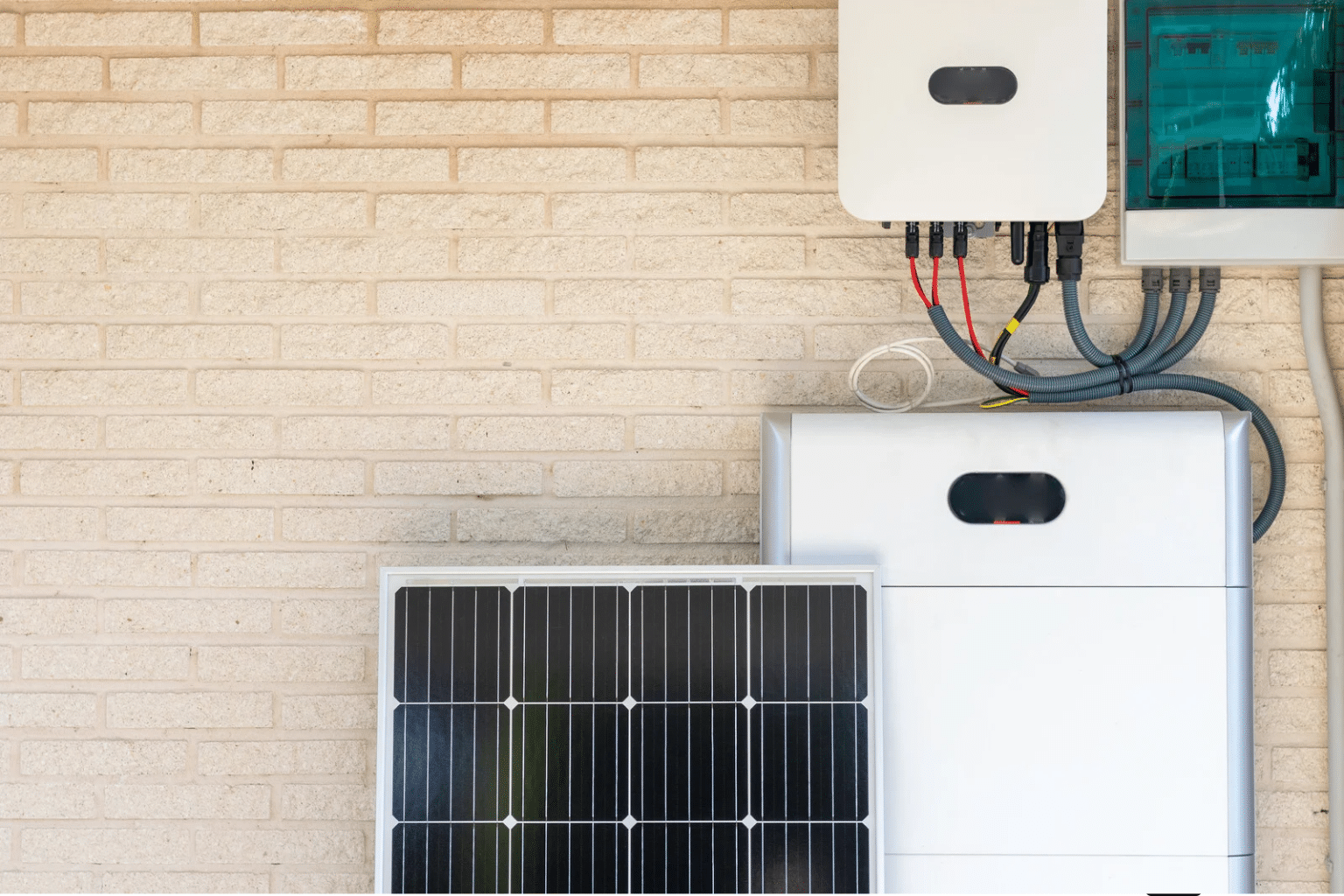
- Will my system include battery backup integration or be designed for future battery addition? (Relevant if you’re considering energy storage as part of your project.)
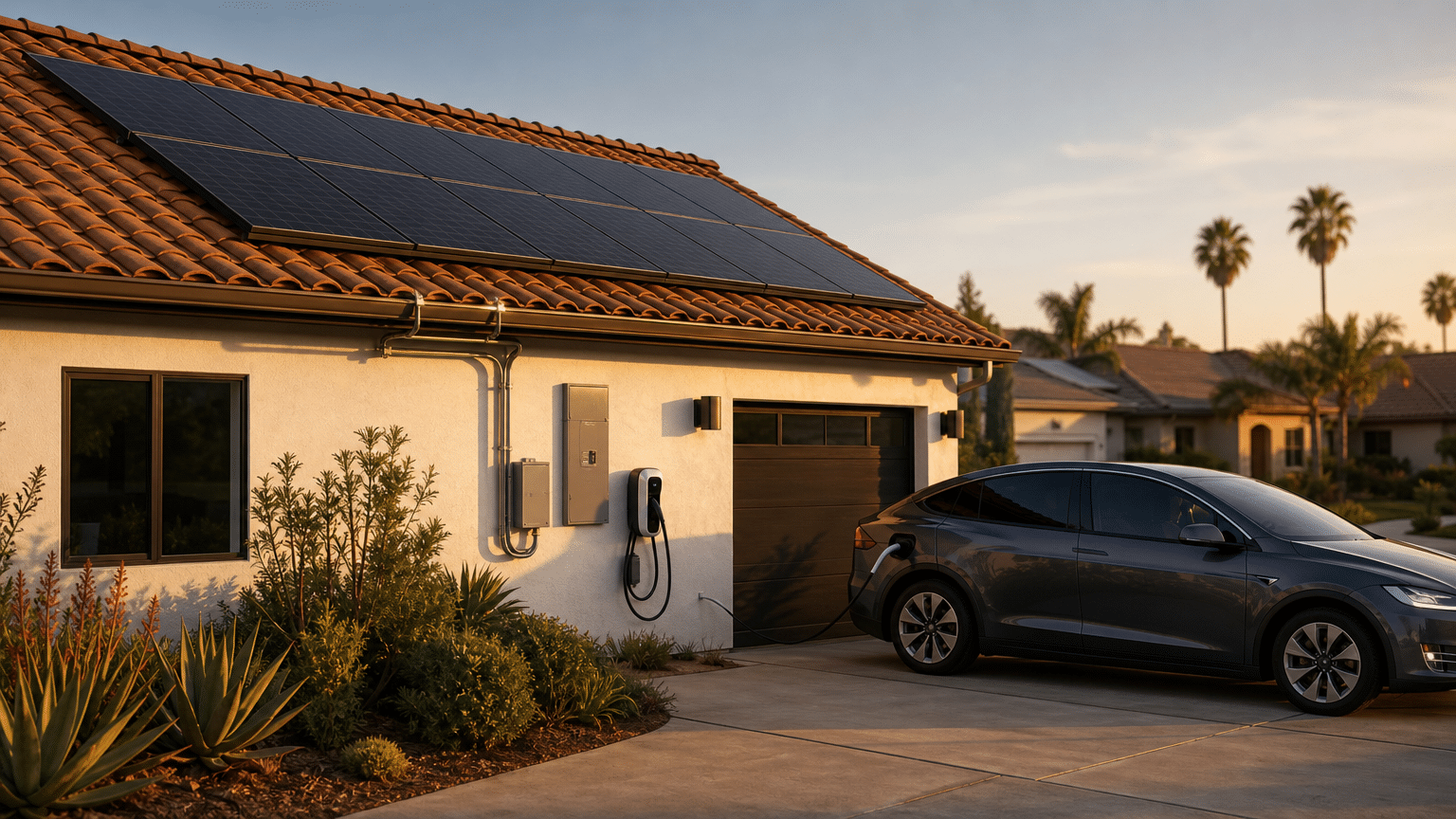
- If I’m adding an EV charger or upgrading my electrical panel, is that scoped and installed by the same crew under the same contract?
Questions about warranties:
- What does your workmanship warranty cover, what are the exclusions, and how long does it run?
- What happens to my workmanship warranty if your company is acquired or goes out of business?
- Which entity is named on the workmanship warranty: your company, or a subcontracted installer?
Also keep the FTC’s August 2024 consumer alert on solar scams in mind. The Federal Trade Commission specifically called out high-pressure sales tactics and misleading claims (including “free solar panels” offers that obscure the actual financial structure) as warning signs in the solar sales process. If a salesperson is pushing you to sign the same day or leading with a “free” framing, slow down and ask the accountability questions above before any contract discussions.
What in-house execution actually changes for you as a homeowner
There’s a reason local solar installer accountability comes up in homeowner reviews constantly. When the company that signed your contract is the same one that sends a crew to your roof, pulls your permits, handles your interconnection application, and responds to post-installation service calls, the dynamic is different. There’s no one to point fingers at.
HomeLink Solar was built around that exact model. Founded by former national solar company executives who saw firsthand how fragmented delivery creates homeowner frustration, the company runs a fully in-house operation: design, planning, and installation all stay under one roof, with no subcontractors involved. For homeowners in the Inland Empire and surrounding Southern California markets, that means a crew and ownership that can reach the large majority of project sites within 90 minutes when something needs attention.
When a customer in Chino, San Bernardino, Corona, or Pomona has a question about their system’s production, they’re calling a local team that knows their project, not navigating an out-of-state call center trying to locate a work order from eighteen months ago. For homeowners who’ve invested in battery backup systems or are monitoring their setup through a Tesla app integration, that kind of direct access matters even more: troubleshooting a storage system or resolving a monitoring discrepancy requires someone who actually knows your configuration.
The 4.9-star review profile HomeLink Solar carries isn’t built on the installation day alone. It’s built on what happens after: the call that gets answered, the site visit that happens the same week, the workmanship warranty that doesn’t require a lawyer to enforce.
That’s not a pitch. That’s the bar you should hold every installer you talk to against.
Bring this checklist to your first consultation
Before you request any quotes, save the questions above. Bring them to every installer conversation you have, including the first one. The quality of the answers you get will tell you more about a company’s accountability model than any marketing material they produce.
Specifically, you’re looking for:
- A real CSLB license number you can verify yourself at cslb.ca.gov
- Named individuals or specific processes for post-installation service dispatch
- A written workmanship warranty with clear scope and an identified obligor
- Transparent handling of permits and interconnection with named responsibility
- Milestone-based payment structure that protects you from subcontractor lien exposure
If a company balks at any of those requests, that’s information. A company that’s genuinely on the hook for the full scope of your project won’t have any reason to avoid answering.
Going solar is a long-term decision. The system on your roof will be there for 25 years. The company you sign with should feel just as committed to your project a decade from now as they do on the day you write the check.
Frequently Asked Questions
How do solar contractors manage permitting and interconnection risk?
Good contractors manage it by owning each step instead of passing it between firms. The contractor files the building permit under its license, gets the final inspection signed off, then sends the utility interconnection package. In SCE territory that package is the application, the single line diagram, the signed interconnection agreement and the final electrical permit approval. Most delays start with incomplete engineering documents, or with failed inspections that nobody on the install crew is positioned to fix. [HomeLink’s own crews handle design, permits, inspection visits and the SCE application, so corrections go back to the same team.] Ask any installer to show you the permit copy, the utility confirmation number and the inspection sign-off at each milestone.
Who is responsible if my permit or utility approval is delayed?
The company that signed your contract should be, in writing. When design, install and permitting are split across firms, a rejection can bounce between them. Before you sign, ask who pulls the permit and under whose license, who attends the inspection and who answers the utility. Vague answers are a warning sign.
What is Permission to Operate (PTO), and how long does it take?
PTO is the utility’s approval that authorizes you to operate your system. SCE says a complete, simple solar-only request may receive PTO within 10 business days. Systems with batteries or non-standard metering take longer because of extra technical review. Wait for your PTO notice before switching the system on, and hold the final payment until the system is live and inspections are cleared.
Can my installer tell me which subcontractors work on my project?
Yes. Under a 2026 California law (SB 517), contractors must give subcontractor details on request, including name, contact information, license number and classification. Check each license on the CSLB “Check A License” tool.
What backup power programs can Southern California homeowners use during recurring outages?
Three routes are worth checking.
– Free portable battery: SCE’s Critical Care Backup Battery Program offers a free portable battery, delivery and setup to customers in high fire risk areas who are on Medical Baseline and rely on powered medical equipment. It is first come, first served until funding runs out.
– State battery rebates (SGIP): The Self-Generation Incentive Program has paid rebates for home batteries. Funds are nearly used up. SCE’s page says its ratepayer budgets are closed to new applicants and the state-funded resiliency budget is on a waitlist. Ask your installer to check current availability before you plan around a rebate.
– Your own whole-home battery: A battery with solar keeps your home running and can lower bills on non-outage days. https://homelinksolar.com/power-choice/
What is a Public Safety Power Shutoff (PSPS)?
A PSPS is when a utility like SCE turns power off in advance during extreme fire weather to reduce the risk of its equipment starting a fire.
How do I prepare a solar battery system before a PSPS?
SCE starts sending notices up to three days ahead, so use that window.
– Check your battery app and make sure it is fully charged.
– Raise your backup reserve if your system has that setting. Tesla’s Powerwall, for example, has a Backup Reserve setting and a Storm Watch mode.
– Run heavy loads like laundry, the dishwasher and EV charging before the shutoff.
– During the outage, avoid air conditioning, EV charging and electric heat, because they drain the battery fastest.
One battery typically powers priority appliances for 24 to 48 hours, according to the CPUC, and solar can recharge it in daylight.
How do PSPS shutoffs affect homeowners with solar?
Solar panels alone will not keep your lights on. The CPUC says most solar systems automatically power down during a shutoff. Some can “island” and power part of the home, so ask your solar provider or a licensed contractor which yours is. With a battery and the right setup, the battery takes over and solar can recharge it while the sun is up. PSPS events may last over 24 hours, and SCE inspects lines before restoring power, which typically takes up to eight hours.
What supplies should my family have ready before a PSPS?
SCE recommends water, a battery-powered radio, flashlights, a first-aid kit, extra blankets and working batteries, plus items for pets and anyone with special needs. For power, SCE lists rebates of up to $200 on portable power stations and up to $800 on generators for customers in PSPS-affected areas, through the SCE Marketplace. Community Resource Centers are usually posted up to a day ahead. They offer device charging, water, restrooms and Wi-Fi.