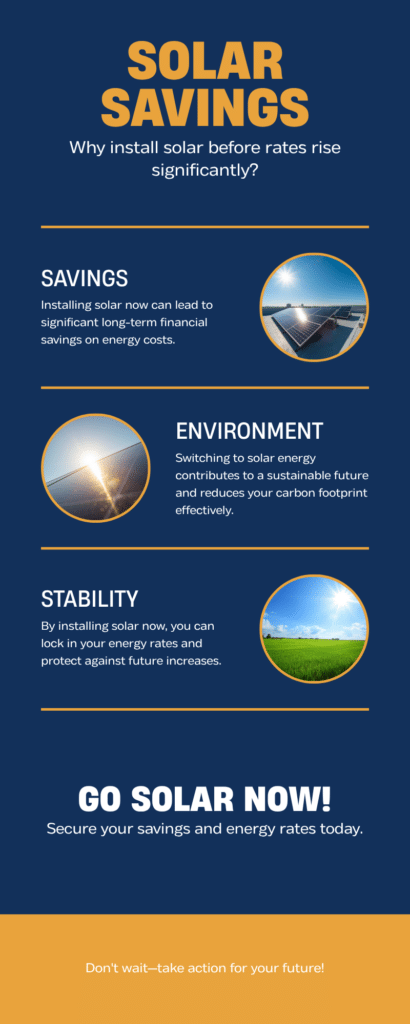
Short answer: yes, in most cases, installing solar before your utility’s next rate increase makes financial sense, because once your system is generating, the portion of your bill it covers stops moving with the utility’s rate schedule. The increase still happens. It just applies to less of your electricity, or none of it, depending on how much of your usage your system offsets. Here’s how that actually works, what it’s worth in real numbers, and how to tell if your specific situation makes the timing worth prioritizing.
The Short Answer: Yes, in Most Cases
If you’re asking whether to install solar before rates increase, the honest answer depends on one thing more than any other: how confident you are that rates are going up again. In California, that’s not really in question, both SCE and other major utilities have approved multiple rate increases in recent years, and the underlying cost drivers behind them haven’t gone away. Given that pattern, installing sooner rather than later means fewer months of paying full price for electricity you could instead be generating yourself.
How “Locking In” Your Rate With Solar Actually Works
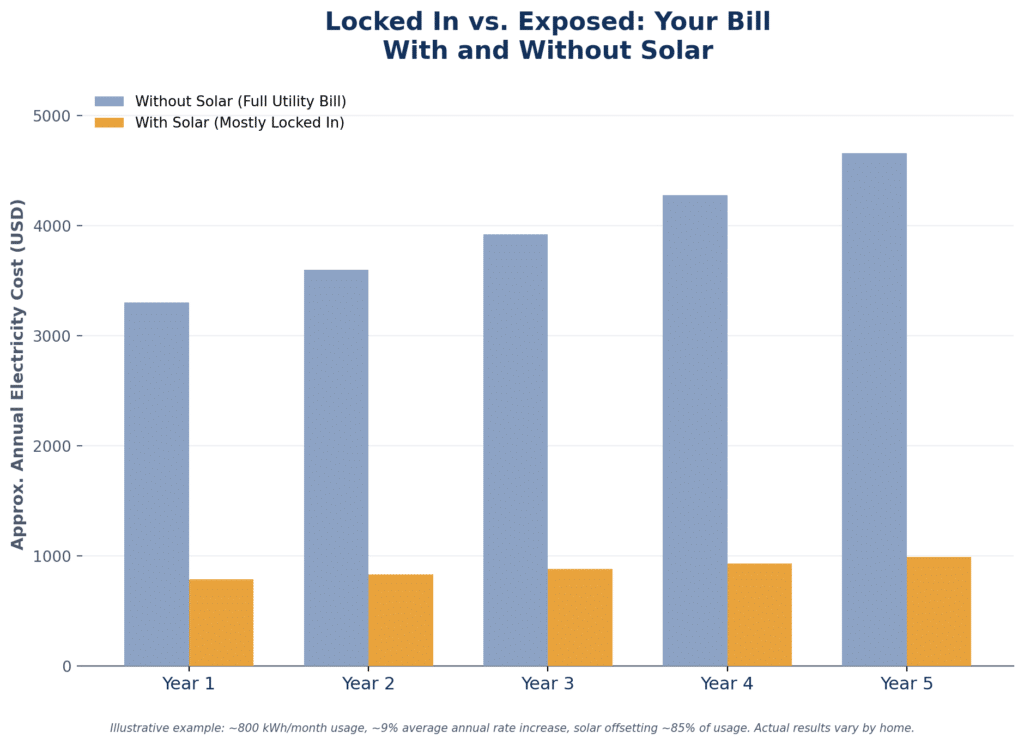
“Locking in” doesn’t mean your bill is frozen forever, fixed charges and any remaining grid usage can still change. What it means is narrower and more useful: every kWh your system produces and you use is a kWh you’re not buying from the utility at whatever rate happens to be in effect. If the utility raises its rate next year, that increase applies to the electricity you’re still pulling from the grid, not to the electricity your panels are making. The earlier your system is up and running, the sooner that protection starts, and the more of the utility’s future rate increases it insulates you from.
Why California Electric Rates Keep Climbing
This isn’t a vague trend, it’s a well-documented one. Wildfire mitigation spending, grid infrastructure investment, and changes to how rooftop solar exports are compensated have all pushed California rates up faster than the national average for years. We break down the specific drivers, including actual CPUC-approved rate case numbers, in Why California Electric Rates Keep Increasing and How Much Have SCE Rates Increased?, which covers SCE’s specific approved increases in recent years. The short version: the trend has been consistently upward, and the factors driving it, aging infrastructure and wildfire risk chief among them, are structural, not temporary.
How Much Could a High Electric Bill Actually Cost You Over Time?
More than it looks like month to month, because rate increases compound. A household paying around $275 a month today, and seeing rate increases similar to what SCE has approved in recent years, could be looking at a noticeably higher monthly cost within just a few years, with no offset unless some of that usage is covered by their own generation. A system that offsets most of that usage effectively caps your exposure to those increases at whatever fraction of your bill the grid still covers. For a full breakdown of what delaying a decision specifically costs, including the now-expired federal tax credit and current equipment pricing, see Why Waiting Another Year Could Cost Homeowners Thousands.
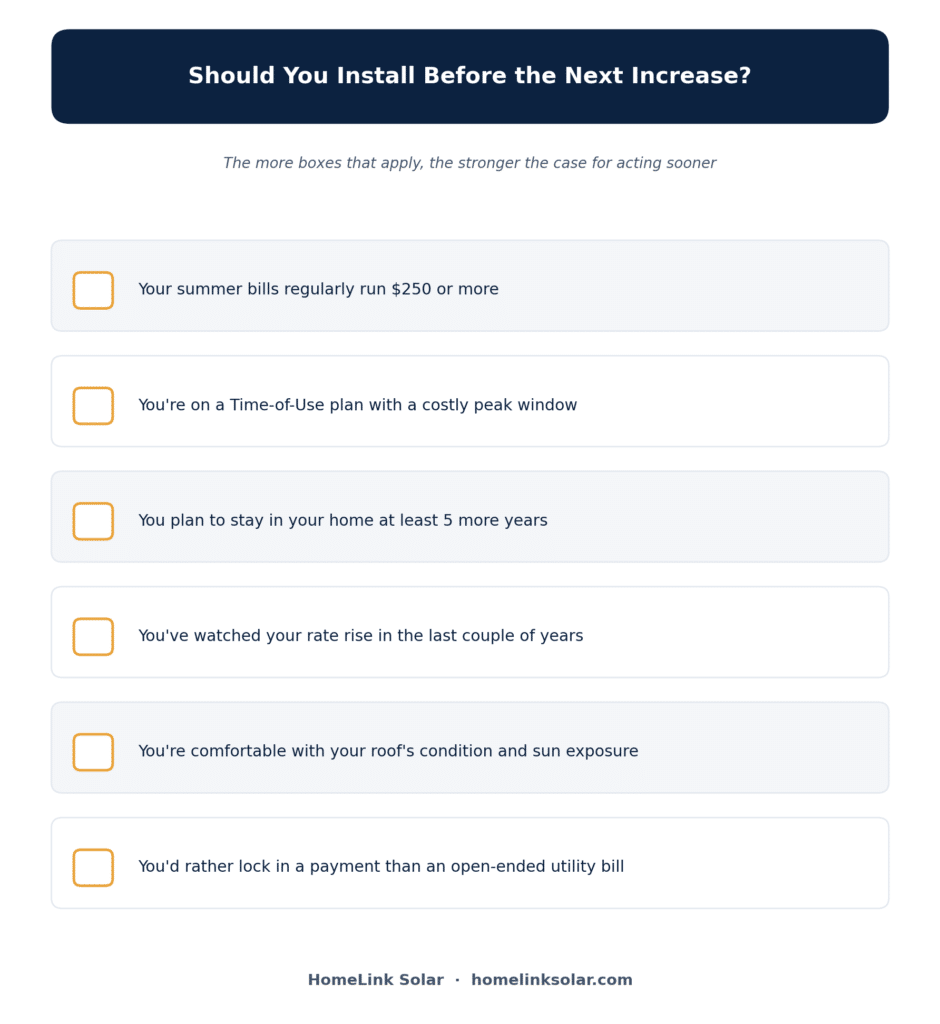
Quick Checklist: Should You Install Before the Next Rate Increase?
Not every household needs to treat this as urgent. A few signs point toward prioritizing it:
- Your summer bills regularly run $250 or more
- You’re on a Time-of-Use plan with a costly peak pricing window
- You plan to stay in your home at least five more years
- You’ve already watched your own rate rise over the last couple of years
- You’d rather lock in a predictable payment than keep absorbing an open-ended utility bill
What If I Can’t Install Right Before an Increase?
It doesn’t erase the case for going solar, it just means a somewhat longer window before your protection kicks in. Rate increases in California haven’t been one-time events, they’ve come in a series of approved steps over multiple years. Installing after one increase still protects you from the next one, and the one after that. The real cost isn’t missing a single specific increase, it’s the cumulative total of every increase you’re exposed to for every additional month you wait, which is exactly what compounds over a multi-year delay.
Beyond Rate Protection: Other Ways Solar Helps You Save on Electricity
Rate protection is one piece of a larger picture. Pairing solar with a battery lets you shift usage away from expensive Time-of-Use peak pricing windows rather than paying whatever the utility charges in the moment, a meaningful way to save on electricity beyond simply offsetting usage. And for households already dealing with high electric bills from air conditioning, pool pumps, or EV charging, a properly sized system can be built around those specific loads rather than a generic estimate, which is where a personalized assessment matters more than a rule of thumb.
How to Decide: A Simple Next Step
Pull your last 12 months of bills, note your highest summer month, and check whether you’re on a Time-of-Use plan. Those three numbers tell you more about your specific timing pressure than any general rule. From there, a proposal that models your actual usage against your utility’s current rate, rather than a generic average, is the only way to know what installing now versus waiting actually means in dollars for your home.
FAQs
Does installing solar guarantee my electric bill will never go up again?
No. Fixed monthly charges and any electricity you still pull from the grid can still be affected by future rate changes. What solar protects is the portion of usage your system actually offsets.
How long does it typically take to notice savings after installing?
Most homeowners see the difference in their very first full billing cycle after their system is activated and passes utility inspection, since the offset applies immediately, not after some waiting period.
Is it better to install right before a specific announced rate increase, or does general timing matter more?
General timing matters more. Chasing one specific announced increase is less important than recognizing the broader multi-year pattern and not letting the decision drag on indefinitely.
Do I need a battery to benefit from installing before a rate increase?
No, solar alone offsets daytime usage regardless of battery. A battery adds a separate benefit, letting you use stored solar power during expensive Time-of-Use peak hours instead of paying grid rates then.
How does HomeLink Solar help homeowners figure out their timing?
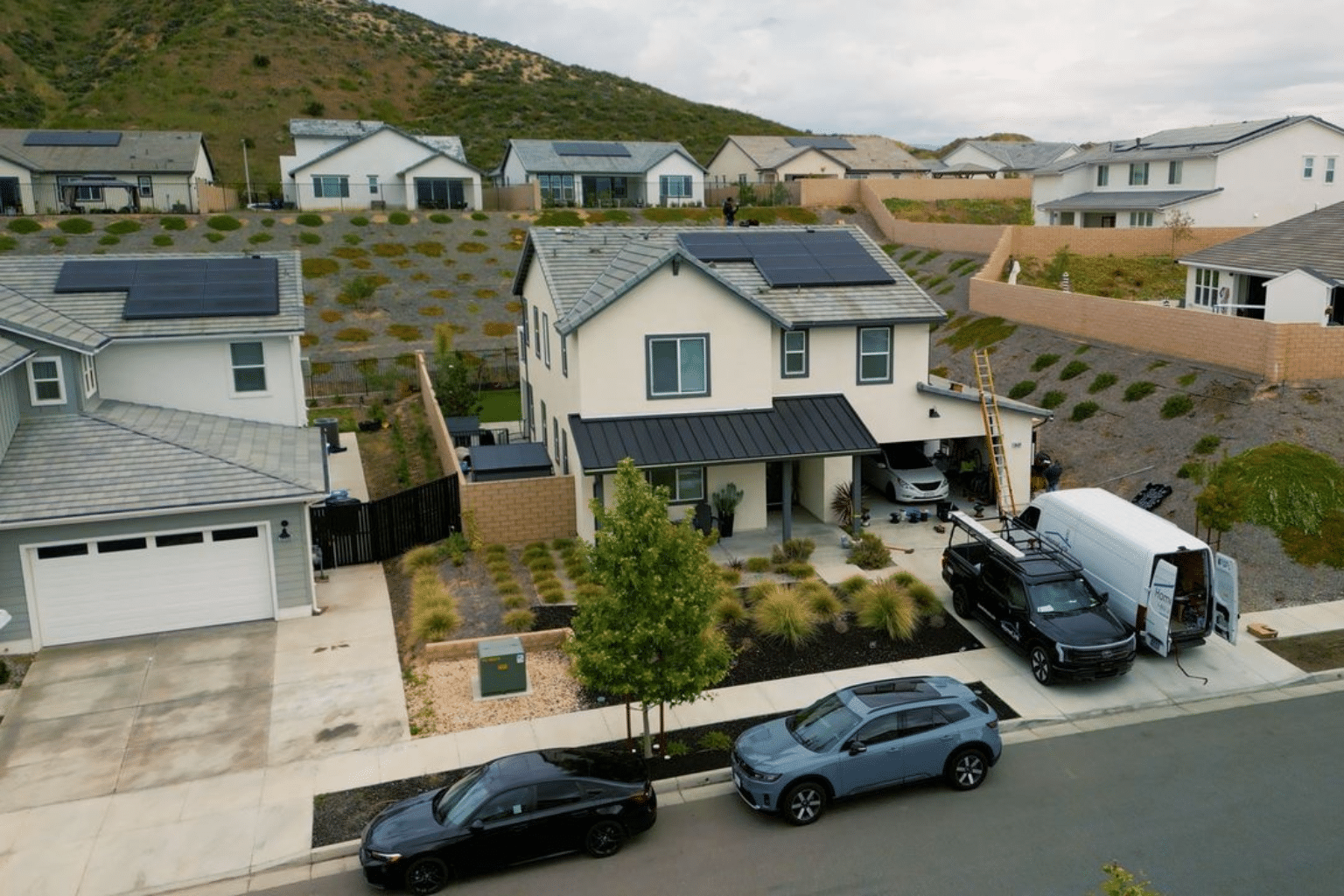
HomeLink Solar (CSLB License #1117534) builds a proposal around your actual usage and your utility’s current rate, so you can see exactly what a system would offset starting now versus a year from now, rather than guessing. Owner Mandy oversees every install personally. See real completed installs on our our installs page, explore no-large-upfront-cost options through our Power Choice Program, or get a free personalized quote.
Waiting on a solar decision doesn’t pause your electric bill, it just means paying full price a while longer while the case for switching keeps building. If you’re already seeing high electric bills and wondering whether to install solar before rates increase again, the numbers above are a reasonable starting point, but a proposal built around your actual home is the only way to know for certain. Get a free personalized quote to see what your specific timing looks like.
Sources
- HomeLink Solar library — How Much Have SCE Rates Increased? and Why California Electric Rates Keep Increasing (underlying CPUC/rate data, not re-derived here)