The direct answer: HomeLink Solar uses its own crews
If you’ve been researching solar installers in Southern California, you’ve probably noticed that the question of “who actually shows up at my house” is harder to get a straight answer to than it should be. It’s a fair concern. A significant portion of the residential solar industry operates through a network of solar contractor subcontractors, where a company sells you a system, hands off your address to a third-party crew, and reassembles communication after the fact. The homeowner often doesn’t realize this until installation day.
HomeLink Solar does not operate that way. The company handles design, planning, and installation through its own in-house crews. No fieldwork is subcontracted out. The same organization that evaluates your home’s energy needs, designs your system, and pulls your permits is the one that sends a crew to your roof. That’s the short answer. The rest of this post explains why that distinction matters in practice, especially once the job is done and you’re living with the system.
What “in-house crews” actually means on installation day
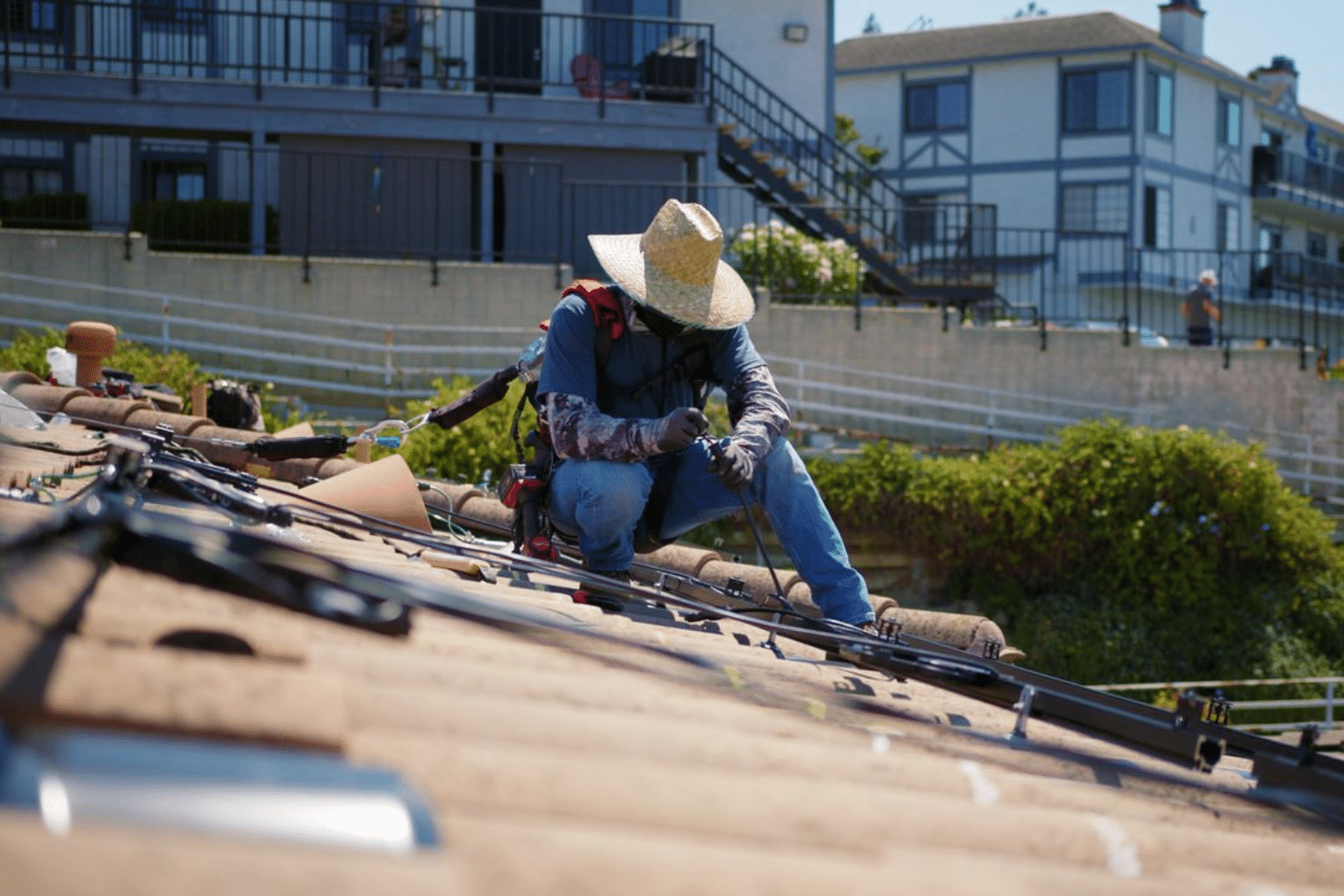
The phrase gets used loosely in the industry, so it’s worth being specific. An in-house solar installer employs the people who design and install the system directly. Those employees are trained under the company’s own standards, use the company’s established processes, and are accountable to the company’s leadership. When the project manager says the work will be done a certain way, that instruction flows to the same crew executing it.
A subcontracted model works differently. In that arrangement, a solar company sells and designs the system, then routes the physical installation to a separate contractor who may handle dozens of different companies’ projects. That contractor has its own staff, its own site habits, and its own workload pressures. The homeowner-facing company has limited direct control over what happens on the roof.
For homeowners, the on-the-ground difference is real. With in-house crews, the person who shows up has direct institutional knowledge of your project. If something in the site survey changed between design and installation, there’s a single chain of communication to address it. Scheduling decisions, workmanship standards, and quality checks all stay within one operating unit. There are fewer handoffs, which means fewer gaps where information gets lost or responsibility gets diffused.
HomeLink Solar’s in-house model covers the full solar installation process: design, planning, and installation as a connected sequence, not three separate vendor relationships. For a homeowner in Chino, San Bernardino, Corona, or Pomona, that translates to a more predictable experience and a cleaner line of accountability from start to finish.
Why accountability after installation is the part most homeowners underestimate
The day your solar panels go live is not the end of the relationship; it’s closer to the beginning of the part that matters most. A system will run for 20 to 25 years. Over that time, there will be questions about production monitoring, possible adjustments to battery or EV charging configurations, and potentially a workmanship issue that needs attention.
This is where solar project accountability becomes tangible. If your installer used subcontracted fieldwork, accountability for workmanship claims can become genuinely ambiguous. The company you contracted with may point to the subcontractor, and the subcontractor may refer you back. Even when everyone acts in good faith, the process takes longer and requires more effort from the homeowner to resolve.
HomeLink Solar backs its installations with a 10-year workmanship warranty, and the system components carry a 25-year solar panel performance warranty on typical installations. When you call with a concern, you’re calling the organization that designed the system and installed it. There’s no intermediate party to route through.
That matters more than it might seem on signing day, when everything is new and optimistic. Three years in, when you want to understand a production dip or get eyes on a mounting point, you want one point of contact with full knowledge of your project and authority to act on it. That’s a structural benefit of an in-house operating model, not just a marketing talking point.
The company was founded by former executives from large national solar providers who saw how fragmented the homeowner experience could become at scale. The in-house model is a deliberate response to that. Owner involvement is direct, and the team that plans a project is connected to the team that installs it.
Why crew model matters more in Southern California than you might expect
Solar installation quality control is relevant everywhere, but Southern California has some conditions that make it worth thinking about carefully. The climate is favorable for solar production, which makes the investment financially meaningful. But utility rate structures in the region, particularly time-of-use billing and net metering policies through utilities like SCE, mean that how your system is sized and commissioned can have a measurable effect on your bill outcomes.
A system that’s installed with minor workmanship inconsistencies, or sized based on a design that wasn’t accurately communicated to the crew, may not perform as projected. These aren’t catastrophic failures; they’re the kind of variance that accumulates over time and is difficult to trace back to a specific cause. Tight solar installation quality control at every phase reduces that risk.
HomeLink Solar operates across Southern California with crews and owner access within 90 minutes of the large majority of project sites. That’s not a trivial logistical detail. For a local Southern California solar company, fast response for pre-installation site visits, permit coordination, and post-installation service calls is directly connected to the in-house model. A subcontracted crew dispatched from a regional pool doesn’t offer the same response profile.
The company serves homeowners in Chino, San Bernardino, Corona, Pomona, and surrounding communities. That geographic focus is intentional. Staying local means the team is familiar with local utilities, local permit offices, and local roof and electrical conditions. That institutional knowledge is harder to replicate with a rotating subcontractor network.
The review record reflects this. HomeLink Solar maintains a 4.9-star review profile across hundreds of customer reviews, with recurring themes around workmanship, professionalism, and responsive communication. Those outcomes are easier to sustain when the same organization controls the full delivery chain.
Questions to ask any solar company before you sign
Whether you’re talking to HomeLink Solar or evaluating other installers, the crew model question deserves a direct conversation. Here’s a short list of questions worth raising during any consultation:
- Who physically performs the installation? Are they your employees or a subcontracted crew?
- If subcontracted, who manages their work quality and scheduling?
- Who is the primary contact if I have a question or concern after installation?
- Who is responsible for workmanship warranty claims, and what’s the process for filing one?
- Can the same team that designed my system answer questions during installation if something changes on site?
These aren’t adversarial questions. Any reputable residential solar installer should be able to answer them clearly and without hesitation. If the answers are vague, or if the company deflects to “our partners handle that,” that’s information worth weighing.
When you ask HomeLink Solar these questions, the answers are straightforward: in-house crews, direct owner involvement, and a single accountable team across design, planning, and installation. If you’re evaluating your options in the Inland Empire or the broader Southern California region, that’s worth a conversation.
You can reach HomeLink Solar directly through homelinksolar.com to discuss your home’s energy situation, ask about the installation process, or request a consultation. Bringing your utility bills and any questions about how the in-house model works in practice is a good way to start.