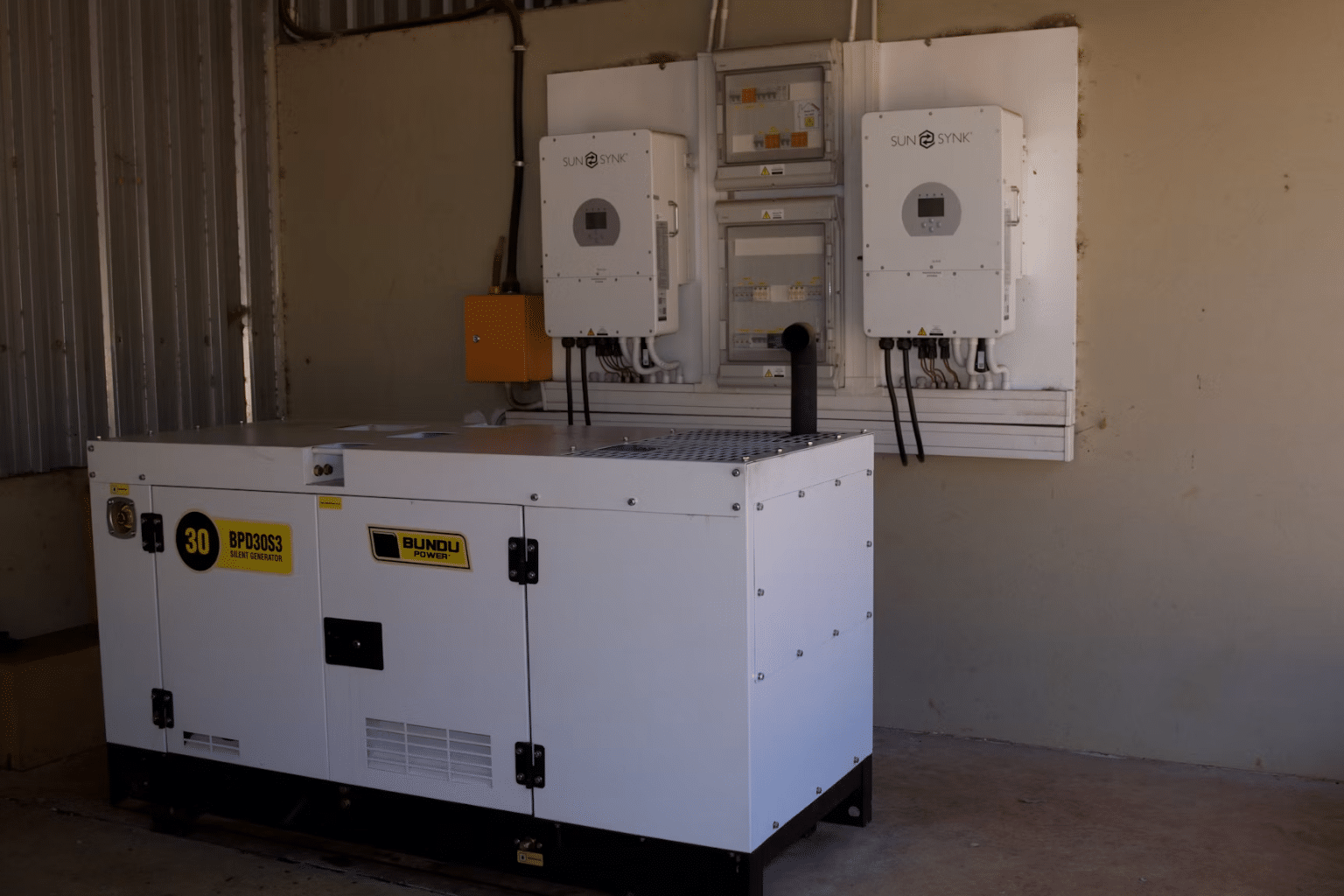
Both keep your home running when the grid doesn’t. Past that, a generator and a home battery are genuinely different products solving the same problem in different ways, with different costs, different maintenance realities, and, in California specifically, different implications for air quality during wildfire season. This is a direct comparison, not a ranked list, so if you want the fuller picture including EVs and portable power stations, see Best Backup Power Options During Wildfires first.
What Are the Main Downsides of a Standby Generator?
Five recurring ones, beyond the fire and carbon monoxide risks we cover in What Is a Public Safety Power Shutoff?. Fuel dependency: a generator is only as good as the fuel supply behind it, and a natural gas line or propane tank isn’t infinite during an extended event. Scheduled maintenance: oil changes every 100 to 200 hours of runtime, annual professional service, and a starter battery that needs replacing every 3 to 5 years, none of it optional if you want it to actually start when needed. Noise: standby generators run in the 60 to 70 decibel range at full load, noticeable to you and your neighbors for as long as an outage lasts. Permitting and placement: most jurisdictions require a minimum clearance from windows and doors, and code-compliant installation isn’t a weekend DIY project. And unlike a battery, a generator provides zero benefit on a normal day, it’s pure standby cost with no return until the one day you actually need it.
How Does a Battery System Switch On Compared to a Generator?
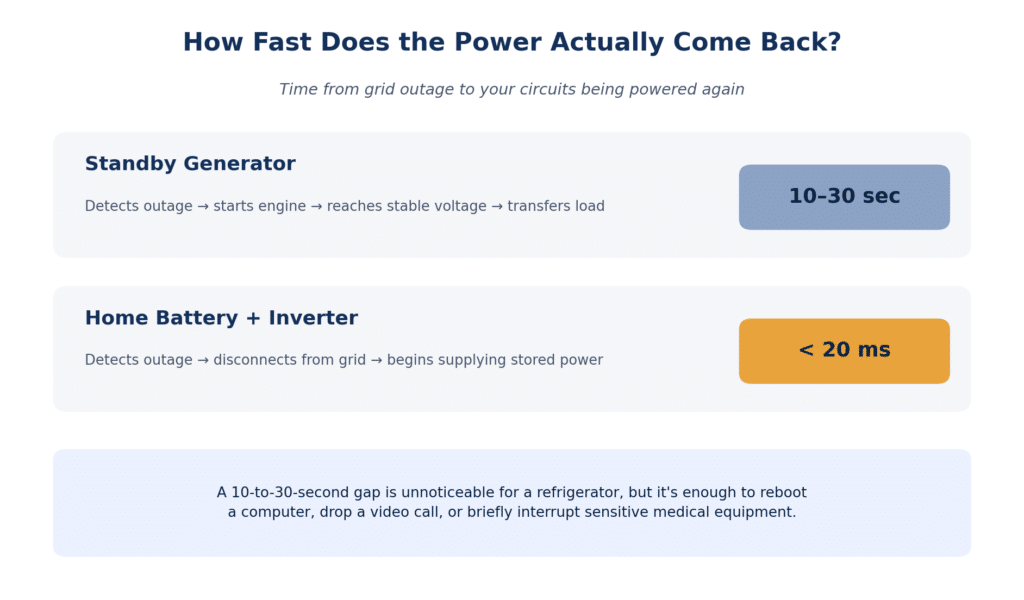
This is a bigger practical difference than most people expect. A standby generator’s automatic transfer switch has to detect the outage, confirm it’s not a momentary blip, start the engine, wait for it to reach stable voltage and frequency, and only then transfer your home’s load, a process that reliably takes 10 to 30 seconds across most manufacturers. A battery-based system works differently: the inverter senses the grid going down and disconnects your home to island it, then begins supplying stored power, typically in under 20 milliseconds, fast enough that most people never notice a flicker.
Which Option Is Better for Wildfire Season Air Quality?
The battery, clearly, and for a reason beyond the carbon monoxide risk already covered elsewhere in our library. Small gasoline and diesel generator engines carry far less stringent emissions controls than modern cars. California’s own regulatory research has specifically flagged small generators under 25 horsepower as an outsized source of particulate matter emissions relative to their size, precisely because portable units below that threshold face minimal state operating requirements. That matters most during the exact conditions a PSPS is called for: wildfire smoke is already elevating outdoor PM2.5 levels, and running a gas generator adds another combustion source to air that’s already compromised. A battery produces zero exhaust, zero particulate matter, and doesn’t add to the problem it’s helping you get through. We cover the same air quality question from the smoke-exposure side in Best Backup Power Options During Wildfires.
Which Costs More Over 10 Years, a Generator or a Battery System?
Closer than the upfront price tags suggest, and the generator’s ongoing costs close most of the gap. A mid-range whole-house standby generator installed runs roughly $7,000 to $15,000, but that’s just the start: annual maintenance typically runs $200 to $600, a starter battery needs replacing roughly every 3 to 5 years at about $200 each, and fuel costs add up fast during real use, industry estimates put a single week-long outage’s propane cost well over $1,000. A home battery, by contrast, installs for roughly $11,864 to $16,052 for a 13 kWh system according to 2026 EnergySage California data, and then requires essentially no scheduled maintenance, no fuel, and no recurring service cost.
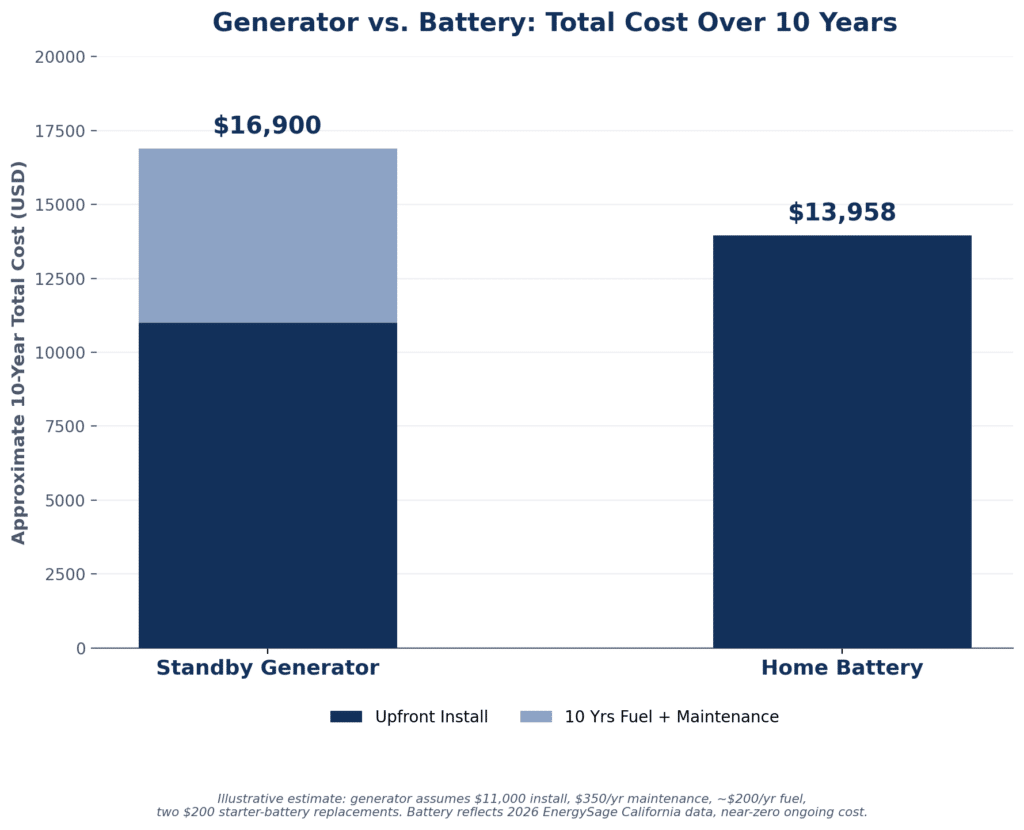
Run the full 10-year math and the two land close to each other, roughly $16,900 for a generator against roughly $13,958 for a battery in this illustrative example, but the battery number is essentially the final number, while the generator’s includes real recurring costs that only grow with use. And a battery paired with solar under NEM 3.0 can offset daily electricity costs the whole time, covered in Why Backup Power Is Becoming Essential in California, a benefit a generator simply doesn’t offer.
Does HomeLink Solar Install Both Generators and Battery Backup, or Just Battery?
HomeLink Solar (CSLB License #1117534) focuses specifically on solar-plus-battery systems, not standby generators. That’s a deliberate choice, not a limitation: battery systems align with the ownership-focused, no-subcontractor model we build around, and they solve the backup power problem without adding fuel dependency, combustion emissions, or a second maintenance contract to your home. Owner Mandy oversees every install personally. See real completed installs on our our installs page, explore no-large-upfront-cost options through our Power Choice Program, or get a free personalized quote.
FAQs
What are the main downsides of a standby generator?
Ongoing fuel dependency, scheduled maintenance (oil changes, annual service, starter battery replacement), noise in the 60 to 70 decibel range, permitting and clearance requirements, and zero benefit on a normal day, it’s pure standby cost until you need it.
How does a battery system switch on compared to a generator?
A generator’s automatic transfer switch typically takes 10 to 30 seconds to start the engine and stabilize before transferring load. A battery-based inverter system disconnects from the grid and begins supplying stored power in under 20 milliseconds.
Which option is better for wildfire season air quality?
A battery, by a wide margin. It produces zero exhaust and zero particulate emissions, while small generator engines carry minimal emissions controls and add combustion particulates to air that’s often already degraded by wildfire smoke.
Which costs more over 10 years, a generator or a battery system?
Close, but the generator’s recurring maintenance and fuel costs largely close the upfront price gap. In an illustrative 10-year estimate, a generator runs approximately $16,900 total versus approximately $13,958 for a battery, and the battery can also offset daily electricity costs, which a generator does not.
Does HomeLink Solar install both generators and battery backup, or just battery?
Just solar-plus-battery systems, by deliberate choice, since that model best fits our focus on ownership and avoiding the fuel dependency and emissions that come with a generator.
Related Reading
See Best Backup Power Options During Wildfires for the full ranked comparison including EVs and portable power stations, and Why Backup Power Is Becoming Essential in California for the bigger picture on rates, policy, and home value. For full household preparedness, see 25 Things Every California Family Should Have Before the Next Power Outage and The Ultimate Home Emergency Checklist.