Buying a home is one of the biggest investments you will ever make. Whether your new home already has solar panels, came with a builder installed system, or has no solar at all, it is worth understanding how your home’s energy setup actually fits your family’s needs.
Many California new homeowners assume that if a home has solar, they are set for years. In reality, many builder solar systems are sized to meet minimum state requirements, not your actual energy usage. Others discover after moving in that their electric bills are much higher than expected, especially once they start charging an EV, working from home, or thinking about adding a battery for backup power.
This guide covers what every new homeowner should know about solar after buying a home, batteries, and energy independence, and how to make sure your system is ready for the years ahead.
Scenario 1: Your New Home Already Has Builder Solar
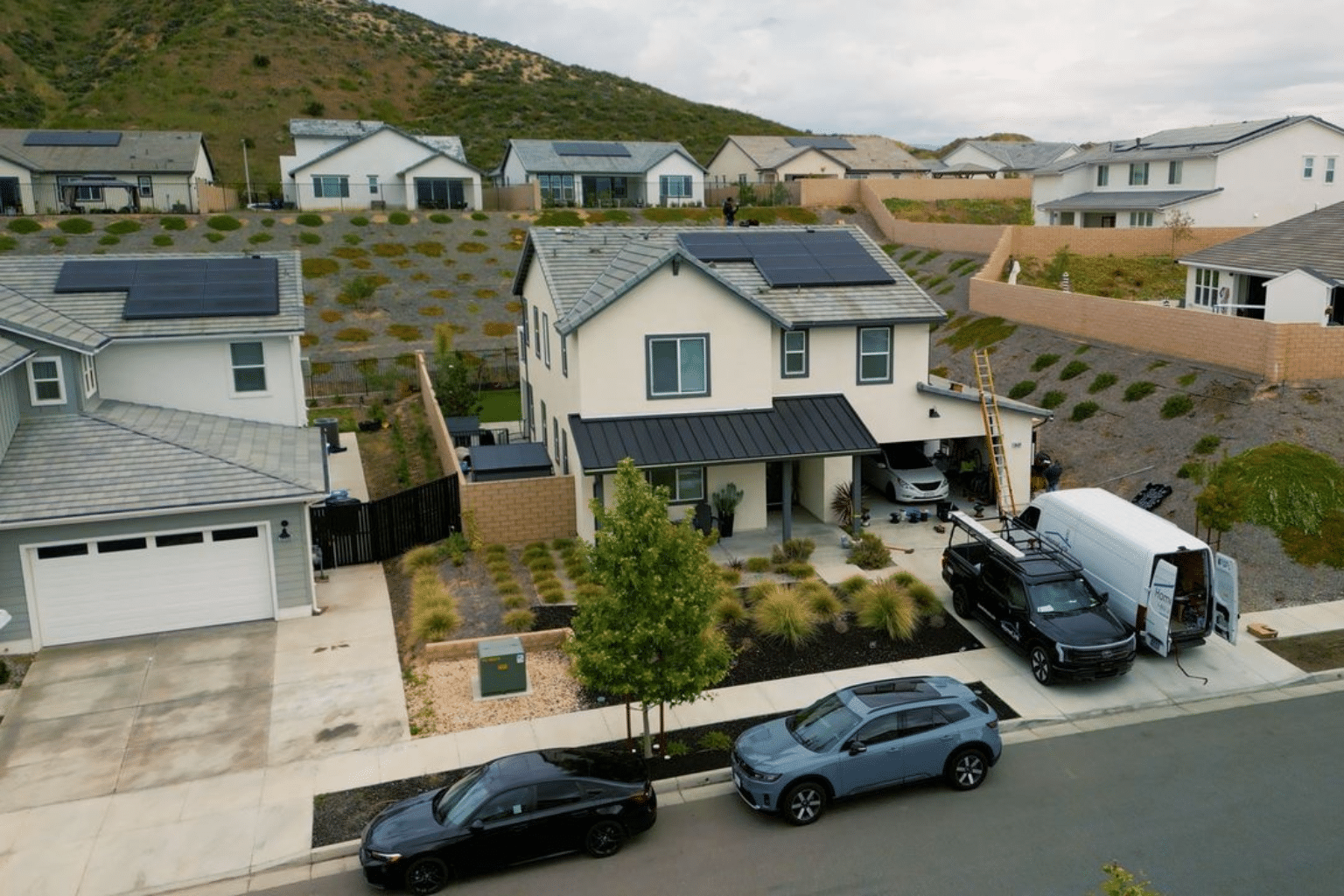
Many newly constructed homes across California now include solar panels to comply with the state’s building code. Since 2020, California’s Title 24 standards have required most new single family homes and low-rise multifamily buildings to include a solar system. That system is sized using the home’s floor area, climate zone, and expected energy use, which means it is built to satisfy a minimum requirement rather than your household’s long-term habits.
As your energy usage grows, builder solar may no longer offset your electricity consumption the way it did on day one.
Common reasons homeowners outgrow builder solar include:
- Charging an electric vehicle
- Installing a pool or spa
- Working remotely
- Running air conditioning more often
- Expanding the household
- Switching from gas appliances to electric
Builder solar is a genuinely good starting point, but it is rarely designed around the way your family actually lives day to day.
Scenario 2: Your Home Has No Solar
If your home does not have solar, you are paying full retail utility rates for every kilowatt-hour you use.
With electricity prices continuing to climb across California, many homeowners choose to install solar soon after closing on a home, so they can start stabilizing future energy costs from day one rather than years down the line.
Installing solar early can also help you:
- Reduce monthly electric bills
- Increase energy independence
- Prepare for a future electric vehicle
- Add battery backup
- Increase your home’s value
- Protect yourself from future utility rate increases
Scenario 3: Your Existing Solar System Isn’t Big Enough
One of the most common situations HomeLink sees is a homeowner who already has solar, but still gets an unexpectedly high electric bill.
Signs your existing solar system may be undersized include:
- Large True-Up bills at the end of your annual cycle
- High summer electric bills
- Adding an EV charger
- Purchasing an electric vehicle
- Installing a heat pump
- Adding a pool
- Home additions
In many of these cases, homeowners can add more solar panels to their existing setup, or upgrade the system to better match current energy needs, rather than starting over from scratch.
Should You Add a Home Battery?
Battery storage has become one of the most valuable upgrades available to California homeowners, whether you already have solar or are installing it for the first time.
Instead of sending excess solar production back to the grid during the day, a battery stores that energy so you can use it later, when electricity costs the most, or during a power outage.
This matters more today than it used to. Under California’s current Net Billing Tariff, the value of exporting excess solar power back to the grid is significantly lower than it was under the state’s earlier net metering rules. Storing that energy yourself, rather than selling it back at a reduced rate, is now where most of the financial upside lives.
Benefits of pairing solar with a home battery backup include:
- Whole-home backup during outages
- Reduced reliance on the utility grid
- Lower evening electricity costs
- Better use of your solar production
- Protection during Public Safety Power Shutoffs (PSPS)
- Increased energy independence
What Should You Do After Buying a Home?
Before making any decisions about your energy system, it helps to understand exactly what you already have.
A proper professional solar evaluation should include:
- Solar panel inspection
- Inverter inspection
- Production review
- Electrical panel evaluation
- Roof assessment
- Battery compatibility review
- Utility bill analysis
- System sizing review
This kind of review tells you whether your current system is actually performing the way it should, and whether it fits your household’s real energy needs, not just the needs of whoever lived there before you.
Signs It’s Time to Upgrade
You may benefit from expanding your solar system, or adding one for the first time, if:
- Your electric bills keep increasing
- You are charging an EV
- You work from home
- You want backup power
- You have added new appliances
- You expect your energy usage to grow
Homeowner Energy Checklist
Before making any upgrades, it is worth asking yourself a few honest questions:
| Question | Why It Matters |
|---|---|
| Do I know how much electricity my home actually uses? | You cannot size a system correctly without this baseline |
| Is my current solar system producing what it should? | Underperforming systems quietly cost you money every month |
| Would battery backup give me peace of mind? | Especially relevant during PSPS events and wildfire season |
| Am I prepared for future utility rate increases? | Rates in Southern California have climbed steadily for a decade |
| Will my family’s energy usage grow over the next five years? | EVs, additions, and remote work all raise usage over time |
Answering these honestly can help point you toward the right long-term energy decision, instead of a guess.
Why HomeLink Helps New Homeowners
Every home, and every homeowner, is different. That is why HomeLink Solar starts with a detailed evaluation instead of a one-size-fits-all recommendation.
Our team will:
- Inspect your existing solar system
- Review your electric bills
- Evaluate your roof and electrical panel
- Determine whether your current system is properly sized
- Recommend additional solar or battery storage if needed
- Design a solution based on your family’s actual energy goals
Whether your home has builder solar, an older system, or no solar at all, we will help you understand your real options for Southern California solar so you can make an informed decision, not a rushed one.
If you are also weighing a program-based option instead of a standard purchase, it is worth comparing the Power Choice Program and the Solar Plus Program against a traditional install. And if you want a broader look at what to check before committing to any solar decision, our guide on what homeowners should know before installing solar panels is a good next stop.
Just Bought a Home? Let’s Make Sure Your Energy System Is Ready.
Your home’s energy needs today may look very different from what the previous owner, or the builder, originally planned for.
Schedule a free Home Energy Evaluation with HomeLink Solar. We will review your existing system, answer your questions, and help you determine whether your home would benefit from additional solar, battery storage, or a more complete energy upgrade.
Schedule your free consultation today.
Frequently Asked Questions
Does my builder warranty cover solar?
Coverage varies by builder and equipment manufacturer. Understanding your specific warranty terms helps you plan any future upgrades without voiding coverage you already have.
Can I add more solar panels?
In many cases, yes. Whether it is possible depends on your available roof space, your inverter’s capacity, your electrical equipment, and your utility’s interconnection requirements.
Can I add a battery later?
Yes. Many homeowners install battery storage a year or two after moving in, once they have a real sense of their energy usage and whether outages or peak rates are a bigger concern than they expected.
Is my existing inverter compatible with an upgrade?
Some systems can be expanded using the existing inverter, while others need an upgrade depending on the equipment’s age and technology. This is one of the first things a proper evaluation should check.
How do I know if my builder solar system is undersized?
The clearest signs are a large True-Up bill at the end of your annual cycle, high summer electricity bills, or adding a major new electrical load like an EV charger, pool, or heat pump after move-in.
What does a professional solar evaluation actually include?
A thorough evaluation covers your panels, inverter, electrical panel, roof condition, past production data, utility bills, and battery compatibility, so you get a clear picture rather than a guess about what your home needs next.