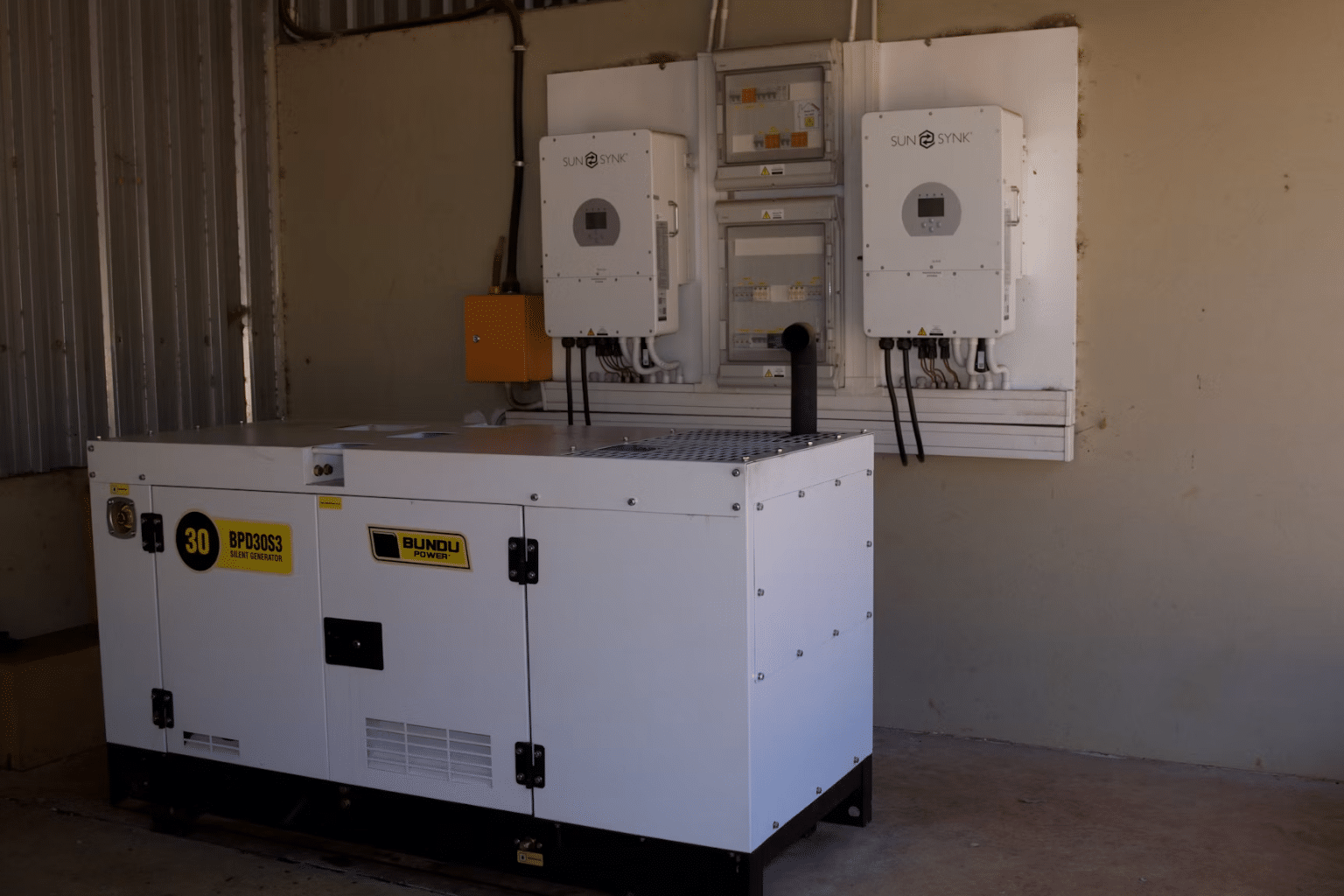
Generator vs Battery Backup: Which Is Better?
Generator vs. battery backup? Compare switch-on speed, 10-year costs, maintenance, and wildfire air quality to find the better home backup.

Over 5 million American homes now run on solar power — and in 2026, that number keeps climbing. Electricity rates have jumped 12–30% across major US utilities in the past year alone, and homeowners are increasingly turning to residential solar installation as a long-term hedge against rising bills. But solar is a significant investment, and before you sign anything, you deserve a clear, honest breakdown of both sides.
This guide covers everything you need to know: the real pros and cons of solar energy in 2026, what solar panel maintenance actually costs, how cleaning solar panels service works, what residential solar installation involves, and how to choose the right solar panel installation service for your home.
Solar energy works by converting sunlight into electricity using photovoltaic (PV) cells in your solar panels. That electricity powers your home directly during daylight hours, while any surplus is either stored in a battery system or sent back to the grid for a credit under your utility’s net billing program.
In 2026, the average US solar installation is 8–11 kW for a typical residential home. After decades of falling panel costs, the price of solar hardware has stabilized — but it is still one of the larger home improvement investments most families make. Which is why understanding both the upside and the trade-offs matters.
This is the most immediate benefit of residential solar installation. The average US homeowner using solar saves between $1,400 and $3,000 per year on electricity, depending on their utility rates and system size. In high-rate markets like San Diego (SDG&E at $0.45/kWh), Los Angeles (SCE at $0.35/kWh), or San Bernardino, the savings can be even larger — $1,800 to $4,200 annually.
Over a 25-year system lifetime, those savings compound dramatically:
– Average US home: $37,000–$154,000 in lifetime savings
– Southern California (SCE area): $95,000–$125,000+
– San Diego (SDG&E area): $150,000+
– Los Angeles: up to $178,000
A solar panel installation service is not a cost — it is an investment with measurable returns. The typical payback period for a residential solar system in 2026 is 4–8 years, after which your system generates effectively free electricity for its remaining 17–21 year lifespan. Few home improvements offer a comparable ROI.
US electricity rates have risen every year for over a decade. In 2026, SCE increased rates 12.9%, PG&E raised theirs 13%, and SDG&E climbed another 10–15%. Once your solar system is installed and paid for, your cost per kilowatt-hour is essentially locked in at zero. That protection compounds in value every year rates go up.
Multiple studies — including a Zillow analysis — show that homes with solar sell for an average of 4–6.9% more than comparable non-solar homes. On a $600,000 Southern California home, that’s $24,000–$41,400 in added value. Solar buyers increasingly view a solar-equipped home as a lower operating-cost asset.
This surprises many homeowners: solar panel maintenance is genuinely low-effort. Solar panels have no moving parts, no combustion, and no mechanical components to wear down. The main ongoing tasks are periodic cleaning (which we cover in detail below) and an annual system inspection. Most manufacturers back panels with 25-year performance warranties.
A typical 8 kW residential solar system offsets approximately 8,000–10,000 pounds of CO2 per year — the equivalent of planting 100+ trees annually or taking one car off the road entirely. For homeowners motivated by both financial and environmental goals, solar is one of the highest-impact changes available.
Despite changes to the federal 30% Investment Tax Credit (ITC), significant incentives remain available in 2026:
Pairing residential solar installation with battery storage (Tesla Powerwall, Franklin Battery) means your home can run independently during grid outages. In California’s wildfire-prone regions, and for homeowners in areas with unreliable grid infrastructure, this backup capability has real practical value — not just financial value.
| Benefit | What It Means in 2026 |
| Lower electricity bills | Save $1,400–$4,200/year depending on utility |
| Strong ROI | 4–8 year payback; 25-year system lifespan |
| Rate protection | Lock in $0/kWh generation cost as rates rise |
| Home value increase | +4–6.9% average resale premium |
| Low solar panel maintenance | $300–$720/year; no moving parts |
| Environmental impact | Offsets ~8,000–10,000 lbs CO2/year per home |
| Incentives available | SGIP rebate, NEM 3.0, $0-down programs |
| Grid independence | Battery storage provides outage protection |
The average cost of a residential solar installation in the US is approximately $21,600–$30,500 before incentives in 2026, depending on system size and location. Even after applying available rebates and $0-down financing, the financial commitment is real. Homeowners who purchase systems outright face the most significant upfront hurdle.
The good news: $0-down options like leases, PPAs, and programs like HomeLink’s Power Choice Program make solar accessible without any upfront investment for qualified homeowners.
Solar panels produce electricity in proportion to the sunlight they receive. Cloudy days, rain, and shorter winter days all reduce daily output. While a well-designed system accounts for seasonal variation, there is no guarantee of consistent production on any given day.
Battery storage significantly mitigates this issue — storing surplus energy from sunny periods for use during low-production periods.
California’s shift to NEM 3.0 (Net Billing Tariff) in 2023 reduced the credit rate homeowners receive for surplus solar energy exported to the grid. Under NEM 3.0, excess solar is credited at a lower “avoided cost” rate rather than the full retail rate. This means a solar system sized purely for export is less profitable than it was under NEM 2.0.
The workaround: pair solar with battery storage to maximize self-consumption and minimize how much you export.
Solar panel installation service providers assess rooftop suitability before installation. Roofs that face north, have heavy shading from trees or adjacent buildings, or that are nearing end of structural life may not be ideal candidates. Steep pitches, unusual materials (clay tile, wood shake), or roofs with limited unshaded south-facing area can reduce output and increase installation complexity.
Without financial incentives, the payback period for solar can stretch to 8–12 years in lower-rate markets. In California, where utility rates are high, payback is typically faster (4–7 years). But homeowners in states with very low electricity rates (under $0.12/kWh) may see payback stretch beyond 10 years, reducing the financial case.
Solar panels lose a small percentage of efficiency each year — typically 0.5% per year for premium monocrystalline panels, meaning a 25-year-old system produces roughly 87–88% of its original rated output. While this degradation is slow and predictable, it means your system’s savings value declines slightly over its lifetime.
Regular solar panel maintenance, including cleaning solar panels service, helps slow efficiency loss caused by soiling and surface contamination.
| Drawback | Mitigation Strategy |
| High upfront cost | $0-down financing, Power Choice Program |
| Weather dependency | Battery storage (Powerwall, Franklin Battery) |
| NEM 3.0 lower export credits | Maximize self-consumption with battery |
| Roof suitability required | Professional site assessment before commit |
| Long payback in low-rate areas | Focus on high-rate markets (SCE, SDG&E) |
| Gradual panel degradation | Quality panels + regular cleaning service |
Solar panel maintenance is one of the most misunderstood aspects of going solar. Many homeowners assume it is expensive or complicated. In reality, solar is one of the lowest-maintenance home energy systems available — but that does not mean zero maintenance.
Here is a complete breakdown of what solar panel maintenance involves in 2026, what it costs, and when to call a professional cleaning solar panels service.
Solar panel maintenance covers four core activities:
Dirt, dust, bird droppings, pollen, and airborne debris accumulate on panel surfaces over time, reducing the amount of sunlight reaching the photovoltaic cells. Even a thin layer of soiling can reduce output by 5–25%. Regular cleaning solar panels service restores production efficiency.
A professional inspection checks electrical connections, mounting hardware, inverter performance, wiring integrity, and overall system health. Annual inspections catch small issues before they become expensive repairs.
String inverters typically last 10–15 years and will need at least one replacement during a 25-year system lifespan. Microinverters last longer (up to 25 years) but cost more per unit to replace. Monitoring your system’s daily output through your utility or inverter app makes it easy to spot performance drops that indicate an inverter issue.
Most modern solar systems include monitoring software (through the inverter or a dedicated app) that tracks daily and cumulative energy production. Homeowners should check this monthly and flag any output that falls below normal seasonal expectations.
Based on current data from HomeAdvisor and Angi:
| Service | Average Cost | Frequency |
| Professional panel cleaning | $200–$500/visit | 1–2x per year |
| Annual system inspection | $150–$300 | Once per year |
| Full maintenance package (cleaning + inspection) | 390–$720/year | Annual |
| Inverter replacement (string) | $1,000–$2,500 | Once in 10–15 years |
| Inverter replacement (microinverter) | $200–$400/unit | Once in 20–25 years |
| Minor wiring/mounting repairs | $100–$300 | As needed |
| Panel crack repair or replacement | $200–$600 | As needed |
The average annual solar panel maintenance cost in 2026 is approximately $520, with most homeowners spending between $390 and $720 per year on cleaning and inspections combined.
Cleaning frequency depends heavily on your location, local environment, and weather patterns. Here is a regional guide:
| Region / Climate | Recommended Cleaning Frequency | Key Reason |
| Desert / High Desert (Inland Empire, Antelope Valley) | Every 1–3 months in dry season | Dust, sand, and minimal rain accumulation |
| Suburban Southern California (LA, Orange County) | 2–3 times per year Moderate dust, pollen, urban particulates | |
| Coastal California (San Diego, Ventura) | Quarterly | Salt spray and airborne sea particulates |
| High pollen regions | Add 1 extra cleaning in spring | Heavy pollen deposition March–May |
| Areas with heavy bird activity | After nesting season | Bird droppings highly concentrated |
| Regions with regular rainfall | 1–2 times per year | Natural rain cleans light soiling |
General rule: If you cannot see clear reflectivity on your panels from the ground, they are overdue for a professional cleaning solar panels service.
| Factor | DIY Cleaning | Professional Service |
| Cost | $0–$50 (supplies only) | $150–$300/visit |
| Safety | Risk of roof falls; not recommended for 2-story+ roofs | Fully equipped with harness and safety gear |
| Effectiveness | Adequate for ground-mounted or easily accessible panels | Superior for rooftop systems; no streaks, no scratches |
| Warranty compliance | Risk of voiding warranty with wrong products | Uses manufacturer-approved methods and solutions |
| Inspection included | No | Often included in visit |
| Frequency flexibility | On demand | Scheduled service plans available |
Recommendation: Homeowners with single-story homes and safely accessible ground-level panels can perform gentle cleaning with a soft brush and garden hose. For rooftop systems — especially two-story homes — hiring a professional cleaning solar panels service is the safer and more effective choice. Never use abrasive materials, high-pressure washing, or soap-based cleaners not approved by your panel manufacturer.
Watch for these indicators that your system needs attention:
Understanding the full residential solar installation process helps homeowners know what to expect, how long it takes, and what to ask the solar panel installation service they choose.
A local solar advisor visits your home (or conducts a virtual assessment) to evaluate your roof, review your utility bills, and design a system sized for your actual usage. Reputable solar panel installation service providers give you a detailed proposal with no obligation.
What to ask: How is system size determined? What equipment brands are specified? Is the quote all-inclusive (permits, labor, interconnection)?
Your system is custom-designed based on your roof dimensions, orientation, shading map, utility rate plan, and energy goals. A well-designed residential solar installation maximizes your annual production and self-consumption.
All residential solar installation projects require building permits from your local city or county, plus an interconnection application with your utility (SCE, SDG&E, LADWP, etc.). The permitting phase typically takes 2–4 weeks. Your solar panel installation service should handle all permits — you should never need to visit a permit office yourself.
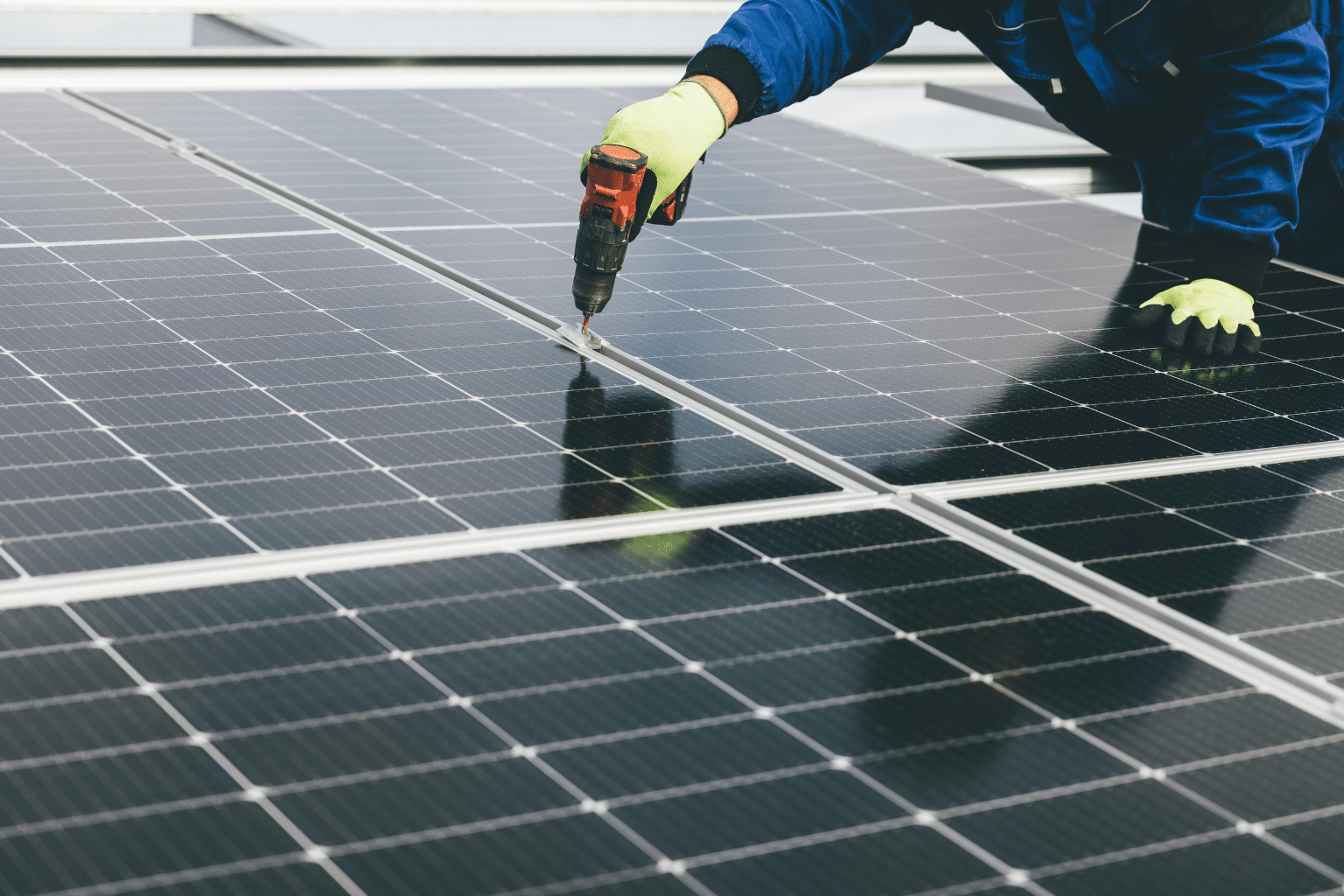
For most residential homes, the physical solar panel installation is completed in a single day by a trained in-house crew. The process involves: mounting the racking system to your roof, installing the panels, running conduit and wiring, and connecting the inverter. A thorough crew will leave your roof clean and your attic undisturbed.
After installation, your local building department conducts a final inspection. Once passed, your solar panel installation service submits the interconnection approval request to your utility. SCE, LADWP, and SDG&E typically process approvals within 1–4 weeks. Your system cannot legally be turned on until permission to operate (PTO) is granted.
Once PTO is received, your system is switched on. Your monitoring app goes live. Your meter starts running backward (or tracking net billing credits). Your utility bill reduction begins from day one.
| Phase | Typical Duration |
| Site assessment and proposal | 1–3 days |
| System design and contract | 3–7 days |
| Permit applications | 2–4 weeks |
| Installation day | 1 day |
| Utility interconnection approval | 1–4 weeks |
| Total: Consultation to Live System | 4–8 weeks |
Note: Timeline varies by utility, city, and local permit workload. HomeLink Solar manages every step for homeowners, including all permits and utility paperwork.
Not all solar panel installation service providers are equal. The solar industry still has a minority of companies that use high-pressure sales, subcontract installations to uncertified crews, or overpromise savings. Here is what to look for.
| Factor | What to Check | Why It Matters |
| CSLB License (California) | Verify at cslb.ca.gov | Unlicensed contractors = no warranty protection |
| In-house installation crew | Ask: “Do you use subcontractors?” | Subcontractors = accountability gap |
| Equipment brands specified | Request panel and inverter model numbers | Tier-1 brands = better performance and warranty |
| Permit handling | Confirm they file all city and utility permits | Unpermitted systems cannot be sold or insured |
| Monitoring platform | Ask what monitoring app is provided | Ongoing performance visibility |
| Warranty terms | Panel (25yr), inverter (10–25yr), workmanship (10yr minimum) | Coverage gap = out-of-pocket repair risk |
| Local reviews | Check Google, Yelp, BBB | Verify 4.5+ star average with substantial review count |
| No-pressure quote process | Gauge the consultation experience | High-pressure = red flag |
Solar energy in 2026 is not perfect — no energy solution is. The upfront cost is real. The NEM 3.0 policy change has shifted the calculus for California homeowners. And not every home is an ideal candidate.
But for the majority of Southern California homeowners paying SCE, SDG&E, or LADWP rates — where electricity costs 23 to 46 cents per kilowatt-hour — the financial math strongly favors solar. Payback periods of 4–7 years, 25-year system lifespans, $95,000–$178,000 in projected savings, minimal solar panel maintenance requirements, and $0-down options through programs like the Power Choice Program all make 2026 one of the most compelling years on record to go solar.
The key is choosing the right solar panel installation service — one that uses in-house crews, is fully CSLB licensed, handles all permits, installs Tier-1 equipment, and provides ongoing support including professional cleaning solar panels service throughout your system’s life.
The pros and cons of solar energy in 2026 ultimately come down to one question: what are you paying for electricity today, and how much would you rather pay?
For the millions of Southern California homeowners paying SCE, SDG&E, or LADWP rates that rank among the highest in the country, solar’s financial case has never been stronger. Low solar panel maintenance costs, the option to start with $0 upfront, and 25-year savings projections in the six figures make residential solar installation a compelling decision.
The process is simpler than most homeowners expect. Solar panel maintenance is straightforward and affordable. And the right solar panel installation service — licensed, in-house, no subcontractors — will handle everything from permits to the first cleaning solar panels service visit.
If you are ready to see what solar would look like for your home, a free no-obligation quote is the best first step.
Generator vs. battery backup? Compare switch-on speed, 10-year costs, maintenance, and wildfire air quality to find the better home backup.
California homeowners are turning to backup power for more than outages. Learn how NEM 3.0, rising electricity rates and grid risks are changing the equation.

Prepare your California home for earthquakes, wildfires, power outages and other emergencies with this complete home emergency checklist, covering plans, supplies and backup power.