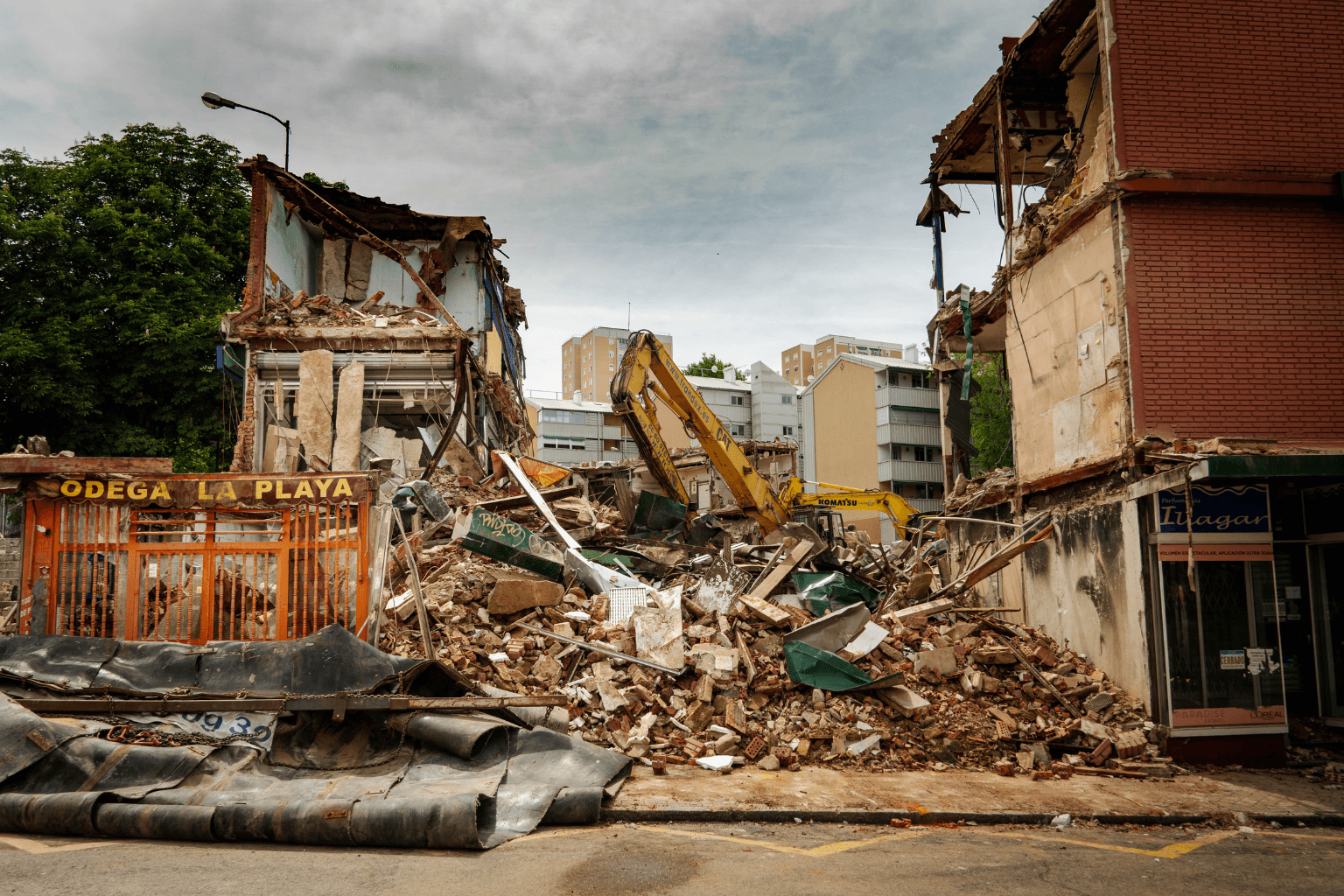
Scientists put the odds at over 99 percent. That is the chance California will see a magnitude 6.7 or larger earthquake sometime in the next 30 years, according to the USGS Uniform California Earthquake Rupture Forecast (UCERF3). It is not a question of if. It is a question of when, and whether your home is ready.
Learning how to prepare for an earthquake in California is not the same as generic disaster planning. Earthquakes strike without warning. There is no evacuation notice, no storm track, no days of lead time. What you do before the shaking starts is what protects your family and your home when it happens.
This guide walks through a full earthquake preparedness plan for California homeowners: what to secure, what to pack, what to know, and how to keep the lights on after the ground stops moving.
How Earthquake Preparedness Is Different From General Emergency Prep
Most emergency checklists are built for storms, floods, or wildfires, disasters you can usually see coming. Earthquakes do not work that way. That changes what “prepared” actually means.
- No warning window. You cannot pack the car and leave ahead of time. Everything that matters has to already be in place.
- The danger is inside your home. Falling bookshelves, water heaters, and cabinets cause far more injuries than collapsing buildings.
- Utilities become hazards. A cracked gas line or damaged electrical panel can turn a survivable quake into a house fire.
- Aftershocks keep coming. The California Geological Survey and USGS both note that damaging aftershocks can follow for days or weeks, so a one-time check is not enough.
That is why an earthquake plan needs its own checklist, not just a copy of your hurricane or wildfire kit.
The California Earthquake Home Safety Checklist
Most earthquake injuries come from things falling, not buildings collapsing. Securing your home takes an afternoon and costs less than most people expect.
- Strap the water heater. An unsecured water heater can tip, snap gas lines, and start a fire. Metal strapping kits cost under $30.
- Anchor tall furniture. Bookshelves, dressers, and china cabinets should be bolted to wall studs, not just the drywall.
- Add cabinet latches. Kitchen and bathroom cabinets fly open during shaking. Latches keep dishes and chemicals from becoming projectiles.
- Move heavy items down. Keep the heaviest items on lower shelves, especially anything above a bed or couch.
- Know your gas shutoff. Keep a shutoff wrench near your meter and make sure every adult in the house knows how to use it.
- Check your foundation bolting. Older homes, especially those built before 1980, may not be bolted to their foundation. A local retrofit contractor or structural engineer can check this in under an hour.
- Secure the electrical panel area. Keep it clear of storage so it is accessible if you need to shut off power.
Building a 72-Hour Earthquake Emergency Kit
A 2025 SafeHome.org survey of 1,200 U.S. adults found that only 5 percent of households have a fully stocked emergency kit, and one in five have none of the recommended supplies at all. Roads, stores, and utilities can take days to recover after a major quake, so your kit needs to cover at least 72 hours per person.
The table below shows where an earthquake kit needs to go further than a standard emergency kit.
| Item | General Emergency Kit | Earthquake-Specific Addition |
|---|---|---|
| Water | 1 gallon per person per day, 3-day supply | Split storage across two rooms in case part of the house is inaccessible |
| Food | 3-day non-perishable supply | Include a manual can opener since electric ones will not work without power |
| Lighting | One flashlight with spare batteries | A flashlight in every bedroom, not just one central kit, in case rooms are blocked off |
| Footwear | Not typically listed | Sturdy shoes kept by every bed. Broken glass is one of the most common post-quake injuries |
| Cash | Recommended | Small bills on hand. Card readers and ATMs often go down with the power grid |
| Gas shutoff tool | Not usually included | Wrench stored near the meter, with every adult trained to use it |
| Power | Spare batteries | Battery backup or portable power station for phones, medical devices, and the refrigerator |
What to Do When the Shaking Starts
Ready.gov and the American Red Cross both recommend the same response: Drop, Cover, and Hold On.
- Drop to your hands and knees before the shaking knocks you down.
- Cover your head and neck under a sturdy desk or table.
- Hold On to the furniture until the shaking stops, and be ready to move with it.
Every October, the Great California ShakeOut brings this drill into homes, schools, and offices statewide. More than 10.3 million Californians registered for the 2025 drill, making it one of the largest earthquake preparedness exercises in the country. Practicing it once a year with your household keeps the response automatic instead of something you have to think through mid-quake.
Planning for Power Outages After an Earthquake
A major earthquake does not just shake your house. It can knock out power for days. The 2017 USGS HayWired scenario modeled a magnitude 7.0 quake on the Hayward Fault and projected widespread fires and outages, with more than half of the total projected damage coming from post-quake fires tied to damaged gas and electrical lines.
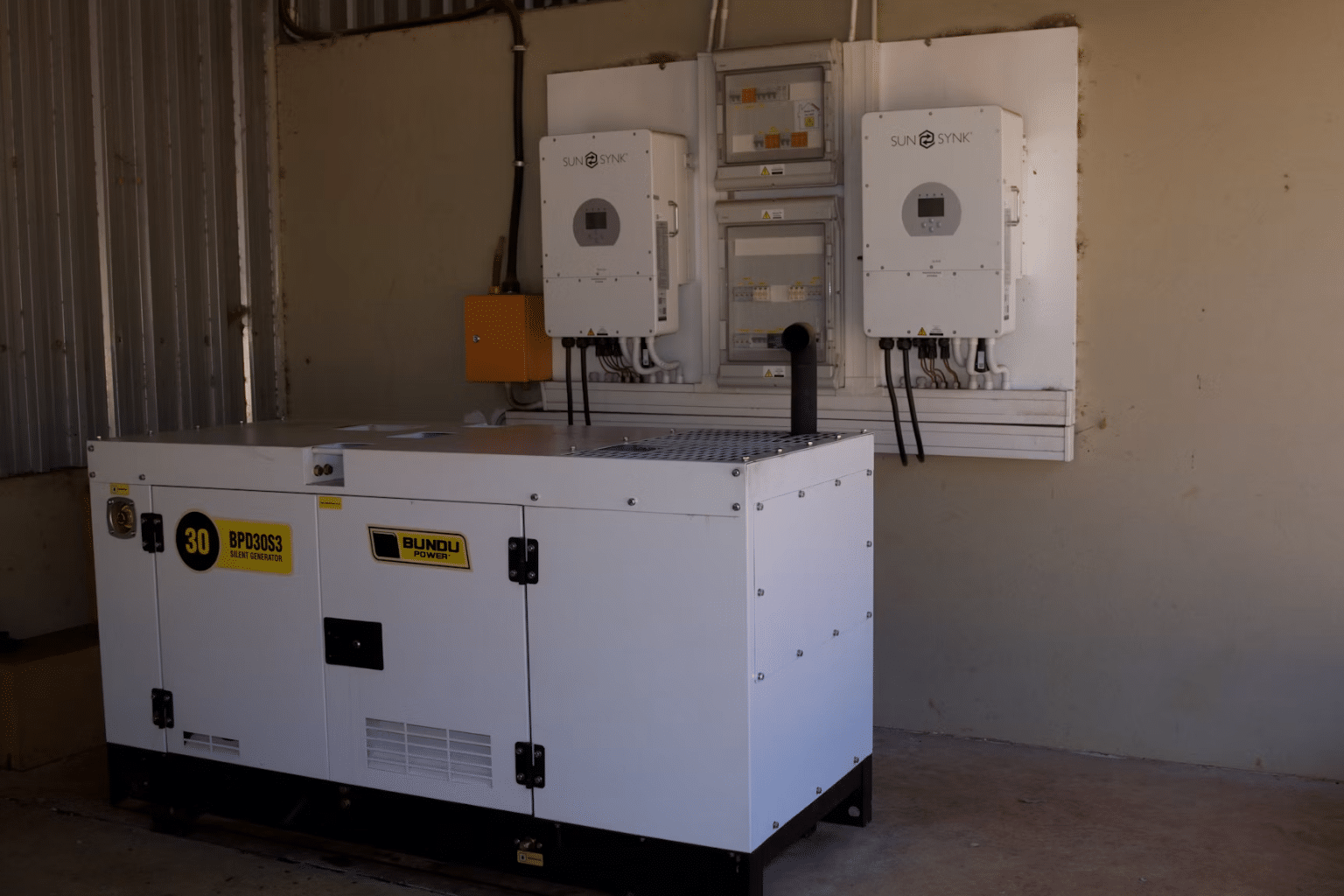
Standard grid-tied solar panels will not help during an outage on their own. Federal safety rules (UL 1741 and IEEE 1547) require solar inverters to shut down automatically when the grid goes down, so utility crews are not at risk from backfeeding power into downed lines. Only a solar system paired with battery backup can keep your home running when the grid cannot.
This matters most for households with:
- Refrigerated medication or medical equipment that needs continuous power
- Well pumps or medical devices with no manual backup
- Home offices or family members who cannot afford days without communication
According to the California Public Utilities Commission, a single home battery can typically power priority circuits like the refrigerator, lighting, and outlets for 24 to 48 hours during an outage. Paired with solar, that backup can extend indefinitely as long as the panels keep recharging the battery during daylight hours.
How California’s Earthquake Risk Breaks Down by Region
| Region | Chance of M6.7+ Earthquake (Next 30 Years) | Source |
|---|---|---|
| Statewide California | Over 99% | USGS / UCERF3 |
| Los Angeles Region | About 60% | USGS |
| San Francisco Bay Area | About 63% | USGS / Earthquake Country Alliance |
California Earthquake Preparedness Checklist
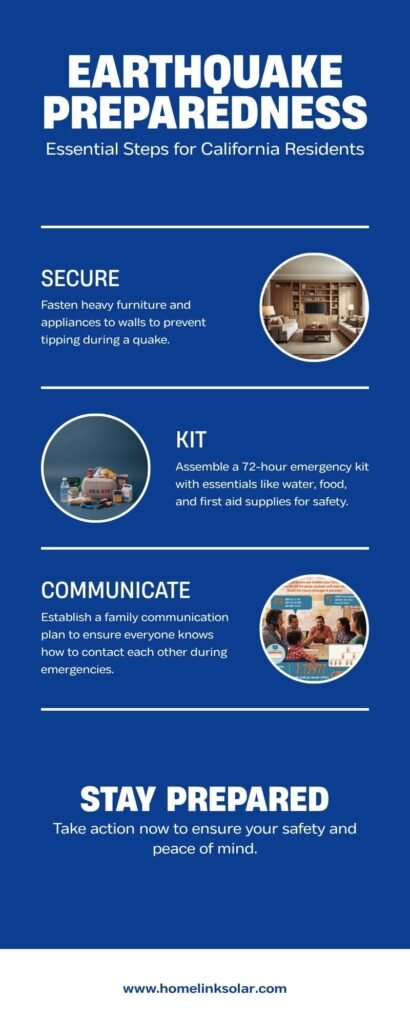
You cannot predict when the next major earthquake will hit California. You can control how ready your home is when it does. Start with the basics: secure what could fall, build a kit that actually covers 72 hours, and make sure your family knows the plan before you need it.
If backup power is part of your plan, HomeLink Solar can walk you through a battery system sized for your home’s essential circuits, with no upfront cost through the Power Choice Program.
Frequently Asked Questions
What should every California home have before a major earthquake?
Every California home should have secured furniture and water heaters, a 72-hour emergency kit with water, food, and a manual can opener, a gas shutoff wrench near the meter, sturdy shoes by every bed, and a family communication plan. Homes built before 1980 should also be checked for foundation bolting.
How is earthquake preparedness different from general emergency preparedness?
Earthquakes strike without warning, so there is no time to pack up or evacuate ahead of the event. Preparedness has to already be in place. The bigger risks also come from inside the home, falling furniture, cracked gas lines, and broken glass, rather than from external hazards like flooding or fire spread. Aftershocks can also continue for days or weeks after the main quake.
Can a home battery help after an earthquake?
Yes. A home battery keeps essential circuits like the refrigerator, lighting, and phone charging running when the grid goes down. Standard solar panels shut off automatically during an outage for safety reasons, so a battery is what actually keeps power flowing. Paired with solar, a battery can recharge daily and provide backup for as long as the outage lasts.
How often should an earthquake plan be reviewed?
Review your plan at least once a year. Check expiration dates on water and food, replace batteries, confirm your family communication plan still works for everyone’s current schedule, and walk through the Drop, Cover, and Hold On drill together. Many households do this each October alongside the Great California ShakeOut.
Does HomeLink Solar offer earthquake-ready battery backup systems?
Yes. HomeLink Solar (CSLB License #1117534) designs battery backup systems built to keep essential circuits running when the grid goes down, including after an earthquake. Owner Mandy oversees every install personally, with no subcontractors, and the Power Choice Program offers $0 upfront solar for qualifying homeowners. HomeLink Solar holds a 4.9-star rating across more than 300 reviews.